

I’ve found that multi-lens 180-degree and 360-degree cameras are replacing PTZ models because they eliminate coverage gaps by recording entire areas simultaneously, while PTZ units can only focus on one zone at a time, creating blind spots during critical moments. A single multi-lens camera replaces 3-5 traditional units, reducing equipment costs from $600-$5,000 per PTZ to $800-$3,500 total, while maintaining continuous surveillance that captures every angle without the change blindness that allows criminals to exploit monitoring gaps during camera repositioning. The sections below explain how different viewing modes and hybrid approaches optimize your specific security scenarios.
Key Takeaways
- Multi-lens cameras eliminate blind spots by capturing multiple angles simultaneously, while PTZ models can only focus on one area at a time.
- A single multi-lens unit replaces 3-5 PTZ cameras, reducing installation costs, cabling requirements, and overall network infrastructure complexity.
- Multi-lens cameras provide continuous panoramic recording without coverage gaps, whereas PTZ repositioning creates critical monitoring blind spots during incidents.
- Digital PTZ features in multi-lens systems allow zooming during playback while maintaining complete scene recording, unlike mechanical PTZ limitations.
- Multi-lens cameras deliver consistent high-resolution imagery across the entire field of view, avoiding the distortion common in traditional fisheye lenses.
How Multi-Lens Cameras Cover Entire Areas Without Blind Spots
Have you ever noticed how traditional PTZ cameras can barely keep up when you need to watch multiple areas at once? It’s a common problem that can lead to missed events while the camera is busy adjusting its position. That’s where multi-lens systems really shine. They capture multiple angles all at once, which means you won’t have to worry about delays when critical moments happen.
What’s great about these multi-lens cameras is that they offer 180° or even 360° coverage. Imagine replacing four to eight fixed cameras with just one unit that offers full-circle views. Each lens has its own job, snapping pictures of its specific area, and then these feeds are stitched together. This results in a comprehensive panoramic view, ensuring you have total situational awareness in places like parking lots, retail spaces, or around building perimeters.
So, why does this matter? It’s simple: every corner is covered without the blind spots that come with traditional pan-tilt-zoom cameras. You get the continuous surveillance that makes you feel secure and in control, without the hassle of frequent manual adjustments.
Honestly, if you’re looking for a surveillance solution that doesn’t let gaps slip through, multi-lens cameras are worth considering. They take the stress out of monitoring large spaces by providing all-around coverage. The best part is, you can focus on the bigger picture instead of constantly managing multiple devices.
In a world where safety is crucial, investing in the right technology is key. If you’ve dealt with the shortcomings of standard PTZ models, you might want to explore the benefits of switching to a multi-lens system. What’s holding you back from ensuring complete coverage?
Recommended Products
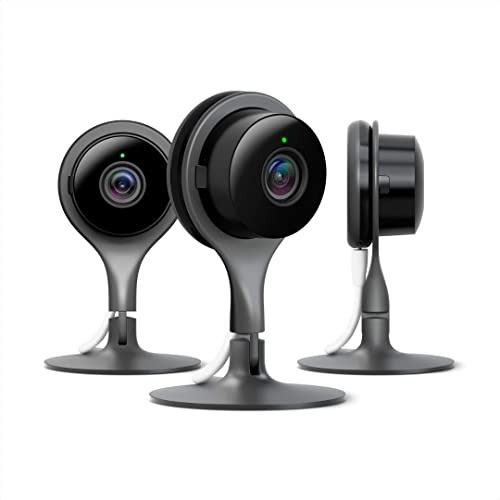
Indoor WiFi camera 3 pack for home security with 24/7 live video and night vision for clear video, no matter how dark it is[1]

ZERO SUBSCRIPTION LOCAL RECORDING - Secure your premises with our 10CH wireless hub featuring an integrated 10 inch touchscreen monitor and a pre-installed 500GB hard drive. Enjoy continuous video logging without recurring monthly fees. This closed-loop setup operates entirely without internet access to safeguard your data from cloud security risks, ensuring uninterrupted capture even during network outages
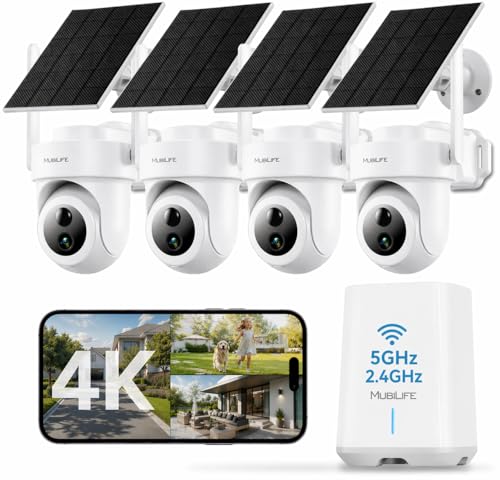
64GB Local Storage & No Subscription Needed — Stop paying for cloud subscriptions! This solar security camera system includes a built-in 64GB TF card, storing up to 180 days of encrypted video footage locally. Your data remains completely private, secure, and under your control with zero hidden costs
Why 360-Degree Cameras Give You Clearer Footage Than PTZ?

If you’ve been in the market for surveillance solutions, you might be wondering why 360-degree cameras are making waves while traditional PTZ cameras remain stuck in the past. Simply put, they can’t deliver the same level of image clarity that 360-degree cameras do across their entire field of view.
When it comes to multi-sensor cameras, each lens is specifically designed to optimize for its own angle. This means you won’t have to deal with the severe distortion often found in fisheye cameras. Plus, you get consistent resolution throughout the entire panoramic image. Why does this matter? Because it helps you capture clear footage that doesn’t suffer from quality loss, especially when it comes to zooming in at odd angles—something PTZ models struggle with.
Try this: think about the last time you needed to review footage. Did you ever find that the quality wasn’t as sharp as you hoped because of operator-controlled positioning that might have missed important details? Here’s the trick: 360-degree cameras come equipped with high-resolution sensors for each lens, which help preserve detail in all directions. That means you get clear, continuous footage without worrying that the camera’s zoom or repositioning will mess things up.
So, when you’re doing forensic reviews, having that sharp detail from any angle makes a world of difference. The clarity advantage can be a lifesaver in identifying crucial moments that could otherwise slip through the cracks.
Recommended Products

【Stunning 4K Night Vision & Smart Detection】 Each wireless outdoor security camera delivers vivid 4K TrueColor Night Vision for clear, vibrant footage, even at night without floodlights. Triple AI Detection precisely identifies people and activity while reducing false alerts—ideal for wireless security cameras outdoor monitoring.

AI FEATURES - This 12MP Fisheye AI PoE Camera features deep IVS: Tripwire & Intrusion. Supports People Counting in area, and Heat Map (Smart NVR Required, ASIN: B08CJJC9HN, B08CJMRQPY) supports people counting in 4 areas. Intelligent Search, event extraction and merging to event videos (Smart NVR Required; Not Included). Offers 12MP @25fps video with a super-wide 360° panoramic view. A PoE injector or switch is required; not included.
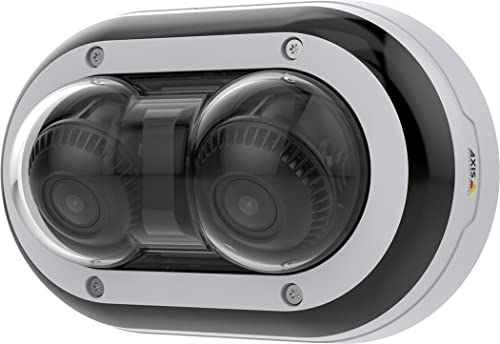
Multi-directional dual sensor camera with 2x2 MP and 360° IR
How One Multi-Lens Camera Replaces 3-5 Fixed or PTZ Units?

Ever tried counting how many security cameras you’d need to cover every corner of a parking lot? It can be a daunting task. With the usual fixed or PTZ cameras, you might end up needing three to five separate units. Each one demands its own mounting brackets, power supplies, and a ton of cabling that can become a headache. There’s got to be an easier way, right?
That’s where the multi-lens camera comes in. This nifty device can capture 180° or even 360° of your space all at once, cutting down that confusion. Think about the time and effort saved—installation just got a lot simpler.
You might be wondering how replacing multiple units with one panoramic camera could make such a big difference. Here’s the trick: it not only makes installation more efficient but also slashes your costs. You can see reductions of 60-80% in cable runs alone, which means less tangled mess on the ground, fewer hours on the installation, and a streamlined network infrastructure. Each lens in the multi-lens unit works independently, covering everything you need without requiring extra cameras scattered around.
So, why does this matter? If you’re responsible for surveillance in a facility, this change could free up your budget and resources for better things. It’s about smart money management and efficiency, keeping your areas secure without the usual hassle.
In short, a multi-lens camera can save you time, money, and space. With all that’s at stake, wouldn’t it be worth considering? Keeping things simple might just lead to better security—not to mention peace of mind.
Recommended Products

【Unmatched 360° Security with 5 Independent Cameras】 Don't just see the road—monitor every critical angle. With five individually adjustable 150° lenses, our system uniquely captures the front view in 4K UHD, plus the cabin, rear seats, sides, and rear in crisp HD. It's the ultimate setup for drivers to document every trip, or for families wanting to watch over the backseat. Choose from multiple recording modes to fit your needs.

[ 4 Channel 360° Wide Angle Recording ] Adopted dual-core processor, this world’s first 4 channel dash cam with 158° front camera, 160° front cabin camera, 160° rear cabin camera and 165° rear camera can record the front, rear, cab and sides of car simultaneously, achieving a groundbreaking 360 degrees coverage without blind spots at a maximum resolution of 2.7K (1944P)+1080P+1080P+1080P, 4x protection, 360° full-guard. Various recording mode(1CH/2CH/3CH/4CH) for you to select freely as needed.

Designed for various vehicles:The highly compatible reversing camera system makes it a superior experience on any vehicle,such as RV, trailer, motorhome, truck, camper with voltage ranging from DC 12-24V.
What Multi-Lens Cameras Cost Compared to PTZ Systems?
How much should you expect to spend when deciding between a multi-lens camera and a PTZ system for your facility? Let’s dive into the numbers so you can budget wisely and see where your money really goes.
When it comes to multi-lens pricing, you’re generally looking at costs between $800 and $3,500 per unit. The exact price tag depends on factors like resolution, which can range from 4K to 12MP, as well as the number of sensors, which typically varies between two to four lenses. Plus, don’t overlook the analytics capabilities, such as object detection or license plate recognition, which can affect the final price.
On the flip side, PTZ expenses can range from $600 to $5,000 per camera. Keep in mind that professional-grade models might require extra cash for hefty mounting brackets, robust cabling for power-over-ethernet-plus needs, and maybe even auto-tracking licenses. Here’s the trick: you’ll often need multiple PTZ units to achieve the same coverage as one multi-lens camera, which means your overall investment can really add up.
So, why does this matter? If you’re trying to maximize your surveillance budget, understanding these costs helps you make more informed decisions.
The bottom line? If you’re leaning towards multi-lens cameras, you’ll get broader coverage with fewer units. If you’re considering PTZ systems, make sure to factor in those additional costs for installation and upgrades. What’s your priority for security—wider coverage or targeted tracking?
Recommended Products

STUNNING VIDEO QUALITY – The Canon CR-N500 Remote PTZ camera delivers advanced performance and outstanding 4K 30p and Full HD 60p video output thanks to a 1" CMOS sensor, DIGIC DV 6 image processor, and Dual Pixel CMOS AF for fast, reliable, and precise auto focus

Ultra High Definition 4K (3840x2160) FOUR TIMES the resolution of 1080P! 32 Channel 6K 12MP NVR 4K Security Camera System with (32) H.265+ 4K (8MP) @20FPS Weatherproof 2.8mm Wide Angle PoE IP Dome Cameras (Built-in Microphone)

20.8MP FX-Format CMOS Sensor
When PTZ Blind Spots Miss Critical Security Events?
Ever wonder why some security systems fall short at the worst possible moments? It’s all too common to hear stories of PTZ (pan-tilt-zoom) cameras missing crucial security events. Imagine a camera zooming in on a suspicious figure while thieves slip in from behind, all because the camera can only focus on one target at a time.
When a PTZ camera pans from one area to another—something that usually takes around 2 to 5 seconds—those quick shifts create gaps that can be catastrophic. During that window, criminals take advantage of what’s called change blindness, entering the scene unnoticed. Even automated tracking systems, designed to follow movement, can struggle when multiple events happen simultaneously. They often prioritize one person and ignore others, leaving blind spots that could have been avoided.
So, what can you do to improve your security? Here are some ideas:
- Consider using multi-lens systems that can monitor several areas at once.
- Think about placing fixed cameras in critical zones to cover the most vulnerable spots.
- Explore options that include overlapping fields of view to minimize gaps.
Frankly, you don’t want to rely solely on a camera that can only see one thing at a time. This can leave substantial gaps in coverage, especially in busy environments.
In the end, being aware of these PTZ limitations matters—after all, you want to protect what’s valuable. So, how can you enhance your security setup to ensure no one slips through the cracks?
Why Hybrid Systems Pair Panoramic Coverage With PTZ Tracking?
Have you ever wondered how to get the best of both worlds in surveillance? Panoramic cameras are fantastic for catching everything in one sweep. But when you need to zoom in on details—like faces or license plates—they just don’t cut it. That’s where hybrid systems come into play, providing both wide-angle views and sharp close-ups.
Consider a setup that merges multi-lens fixed cameras with PTZ (pan-tilt-zoom) units. This combination allows you to monitor large areas continuously while having the option to zoom in when necessary. The panoramic camera gives you an overall awareness of what’s happening, while the PTZ camera can focus on specific incidents or track someone that’s far away—think over 300 feet.
Here’s the trick: this dual functionality means you don’t have to choose between watching a broad area and getting fine detail. You can maintain a watchful eye on the background events while zooming in on the crucial parts when it matters most. Honestly, it’s about having peace of mind without compromise.
Recommended Products

🌟【𝐓𝐞𝐧𝐯𝐞𝐨 𝐏𝐓𝐙 𝐂𝐚𝐦𝐞𝐫𝐚 𝐚𝐧𝐝 𝐂𝐨𝐧𝐭𝐫𝐨𝐥𝐥𝐞𝐫 𝐁𝐮𝐧𝐝𝐥𝐞】The Tenveo PTZ Camera and Controller Bundle INCLUDES: Tenveo AI Auto Tracking NDI PTZ Camera SDI/HDMI/USB3.0/LAN(PoE) 30X Optical +8X Digital Zoom Live Streaming Camera(𝐕𝐇𝐃𝟔𝟑𝟎𝐀-𝐍𝐃𝐈 -3pcs) and PTZ Camera Joystick Controller - 7’’ LCD Quad-Screen Real-time Preview 4D Joystick NDI PTZ Controller(𝐊𝐁𝟑𝟎𝟎𝐏𝐑𝐎), which is ideal for Church Live Service, Video Conference, School, Wedding, Live Streaming, Broadcast, Online Education, Product Launch, Video Production and House of Worship.

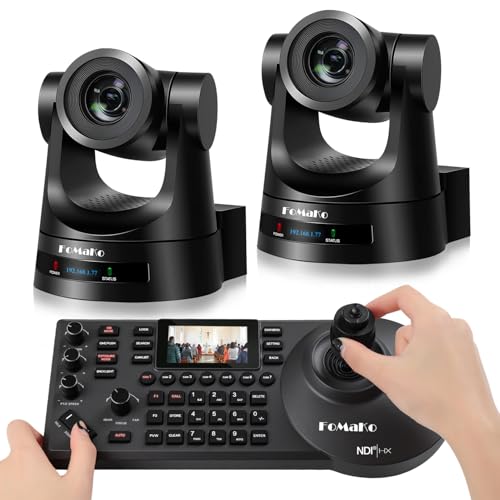
【 FoMaKo PTZ Camera Bundle with 30x Optical Zoom 】. 2pcs FMK30SDI + 1pc KC608. FoMaKo HDMI PTZ Camera 30X PoE camera AI Auto Tracking with LCD Screen. Simultaneous 3G-SDI IP USB HDMI PTZ Camera, IP Live Streaming Camera with HDMI, PoE Supports, Suitable for Church live service, House of worship, Education, Teaching Broadcast, Conference, Esports, Events etc.*Note: NDI Upgradeable, We can help to upgrade it to an NDI camera if required.
How Digital Zoom Lets You Inspect Details While Recording Everything?
Have you ever found yourself missing critical moments because your camera couldn’t zoom in fast enough? It’s a common issue, especially when you need to keep an eye on everything happening around you. But there’s a smart way to inspect the details without sacrificing wide coverage.
Multi-lens 360° cameras are pretty amazing because they offer a digital PTZ (pan-tilt-zoom) feature. This means you can focus on specific areas during playback or even while you’re recording live, all while keeping a continuous record of the whole scene. So, if you need to look at license plates, faces, or anything suspicious, you can do that clearly. This is a real advantage—unlike traditional mechanical PTZ cameras that can lose sight of what’s happening outside their narrow view, these panoramic wonders capture everything simultaneously. With resolutions hitting up to 12MP per sensor, you don’t have to worry about missing out on important evidence when checking certain areas.
So, how does this technology apply to you? Here are some things to consider:
- You’ll get a complete view of the area while being able to zoom into essential details.
- No more frantic moments trying to adjust the angle mid-event.
- Continuously recording means you can review the footage later, ensuring you catch every detail.
Frankly, this might just change the way you think about security and surveillance. Why not embrace the benefits of having both a wide and detailed view? You could find it a lot easier to assess situations and gather the information you need.
What Viewing Modes Work Best for Different Monitoring Scenarios?
When it comes to security, choosing the right viewing mode can really impact how well you keep an eye on things. Have you ever stood in a store and felt overwhelmed by trying to catch every little detail? In places like retail, panoramic mode is a lifesaver. It helps you watch entire aisles at once, so you can see how customers move around and spot activity at checkout areas in one glance.
Now, let’s chat about parking lots. They can be tricky, right? That’s where quad mode comes in handy. It splits the 360° view into four separate zones. This means you can zero in on entrances, exits, and those busy areas without missing out on what’s happening around the edges. Pretty useful for keeping tabs on traffic!
If you’ve got your eyes set on large open spaces like warehouses or entry lobbies, look for immersive 180° displays. They really help eliminate those sneaky blind spots behind support columns, giving you a clearer view of everything going on. So, you get more complete information about your surroundings.
Now, let’s not forget about perimeter security. For that, full 360° dome views shine the brightest. They provide a level of situational awareness that traditional PTZ cameras struggle to match, especially when they’re busy moving around to focus on different spots.
To sum it up, knowing which viewing mode fits your situation can make a world of difference. Think about your specific needs and go from there. Are you ready to take your monitoring to the next level?
Frequently Asked Questions
Do Multi-Lens Cameras Work Effectively in Low-Light or Nighttime Conditions?
I’ve found multi-lens cameras deliver excellent low light performance through larger sensors and infrared capabilities per lens. Their nighttime visibility matches or exceeds PTZ models, with some offering advanced features like starlight technology for challenging conditions.
How Much Network Bandwidth Do 360-Degree Cameras Require Compared to PTZ?
Bandwidth burdens are bigger for 360-degree cameras since they’re streaming multiple sensors simultaneously. However, I’d say modern compression and efficient network requirements management can match PTZ camera bandwidth, especially since PTZ models consume more when constantly moving and refocusing.
Can Existing PTZ Infrastructure Be Upgraded to Multi-Lens Camera Systems?
Yes, I can upgrade existing PTZ infrastructure to multi-lens systems. Most modern installations share compatible network cabling and PoE power. However, I’ll need to verify mounting brackets, camera compatibility with your VMS software, and ascertain adequate bandwidth for multiple sensors.
What Weatherproofing Ratings Do Multi-Lens Cameras Have for Outdoor Installations?
I’ll tell you that most multi-lens cameras carry IP66 or IP67 weatherproof ratings for outdoor durability, protecting against dust, rain, and extreme temperatures. Higher-end models even achieve IK10 impact resistance for vandal-proof installations.
Are Multi-Lens Cameras Compatible With Current Video Management Software Platforms?
Yes, I’ll confirm that multi-lens compatibility exists with major VMS platforms through ONVIF standards and manufacturer plugins. Most brands guarantee seamless software integration with systems like Milestone, Genetec, and Exacqvision, supporting dewarping and panoramic features natively.