
Quick Answer: I’ll explain that photographing your neighbor’s property from public spaces or your own yard is generally legal, provided you’re not trespassing or using extreme measures like high-powered zoom lenses to invade areas with reasonable privacy expectations. However, state laws vary considerably—Florida, Texas, and Tennessee require consent for residential photography, while Virginia prohibits drone flights within 50 feet of homes. The critical factors include your physical location, the target area’s privacy expectations, and whether your actions constitute harassment or stalking under local statutes, which I’ll break down further below.
Key Takeaways
- Photography from your own property or public spaces is generally legal if it captures only visible elements without trespassing.
- State laws vary significantly; Florida, Texas, and Tennessee restrict photographing private property without explicit consent from occupants.
- Using zoom lenses or drones to invade areas with reasonable privacy expectations creates legal gray areas and potential liability.
- Private spaces like fenced yards maintain higher privacy protections than public areas visible from streets or sidewalks.
- Courts evaluate whether privacy invasion occurred based on reasonable expectations and methods used to capture images.
Is It Legal to Photograph Your Neighbor’s Property? 4 Boundary Rules
Why does pointing a camera toward your neighbor’s yard cause so much legal confusion? You might think snapping photos is pretty straightforward, but when it comes to private property, things can get tricky.
Let’s break down the four key rules you should know about your photography rights. First off, taking photos from your own yard or a public space like a sidewalk is usually fair game. You don’t need to ask your neighbor for permission if you’re shooting from these spots. Keep in mind, though, that it’s important to stay within your property lines.
Physical boundaries matter a lot. If you step onto your neighbor’s land just to get that perfect shot, you might be crossing into illegal territory. Trespassing isn’t just about your intention to photograph; it’s about respecting their space.
So, what about what you can capture? Well, anything you can see from a spot where you’re legally allowed to be doesn’t have privacy protections. If it’s visible to the naked eye, you’re probably good to go. But here’s the catch: if you’re using a zoom lens or trying to climb up to get an angle that peeks over a fence, it’s considered crossing a line.
Artificial barriers, like fences or tall hedges, create a sense of privacy that you should respect. Neighbors have a reasonable expectation of privacy when they’ve made efforts to shield their property visually. If you’re thinking about taking those sneaky shots with a fancy camera setup, consider the potential backlash.
In short, understanding these photography boundaries can save you from future headaches. Always remember the importance of respecting your neighbors’ space as you navigate the world of photography. Do you think it’s worth risking a neighborly dispute for that picture?
Can Your Neighbor Use Drones or Zoom Lenses to Photograph Your Home?
How far can your neighbor go with technology before their photography becomes illegal intrusion? This question is more common than you think, especially with the rise of drones and high-powered lenses. It’s crucial to know your rights and privacy boundaries.
Drone regulations can be tricky. Each state has different laws. For instance, in California, there’s a law—AB 856—that clearly states unmanned aircraft cannot invade privacy over private land. In Virginia, they take it a step further by classifying drone flights within 50 feet of homes as misdemeanors. The best part is that FAA regulations work alongside these state rules, so it’s not just about being in legal airspace; consent is key if you’re flying over someone else’s property, even if you’re technically in the right sky.
Now, let’s talk about lens legality. While it’s totally fine to take pictures with your eyes, high-power telephoto lenses can put you in a gray area. If your neighbor’s snapping shots through your window or over a privacy fence, it might cross the line from innocent photography to illegal intrusion. Courts often look at what a reasonable person would expect in terms of privacy. So, if you’re close enough to make out what’s happening in someone’s backyard, that’s not just being neighborly anymore.
So, why does this matter? Understanding these rules can help you protect your space. If you’re uncomfortable with how your neighbor is using technology, it’s worth discussing it. Having a friendly chat about boundaries can save a lot of awkwardness down the road.
Recommended Products

Durable Vinyl Material: Built to last, our fences are made from sturdy vinyl, providing a perfect balance of durability and low maintenance.

PREMIUM QUALITY: Our Artificial Plant Panels are made of High Density Polyethylene (HDPE) for great durability which won't wither or fade, even under harsh outdoor environment conditions.

Premium Material - Constructed using high-density polyethylene, these green wall panels retain their freshness and vibrancy even in challenging outdoor conditions. Integrated UV protection ensures long-lasting color retention.
How State Laws Restrict Residential Property Photography
Photography can be a great way to capture the beauty of residential properties, but do you know the rules governing it? Many people don’t realize that state laws can put the brakes on your hobby or profession when it comes to snapping photos of homes. Depending on where you are, penalties can range from light fines to serious criminal charges.
So, what do you need to look out for? States have different rules that dictate how and when you can photograph residential areas. For example, Florida has a law called SB 766, which means you can’t take photos of private property without getting permission first. This is stricter than many federal guidelines. Texas takes a strong stance too—under HB 912, snapping or sharing images without consent from the occupants is a crime, especially if those folks expect a degree of privacy.
Tennessee also has its own regulations. With SB 1892, intentionally photographing someone’s property without consent can lead to a Class C misdemeanor, and nobody wants that on their record, right? It’s worth noting Virginia’s law, which targets people who get too close to houses—if you’re within 50 feet of a home, it might be considered a violation.
What’s the takeaway here? Each state sets its own rules on property photography, adding extra layers of privacy protections. Don’t just assume it’s okay to snap a picture of your neighbor’s lovely garden or well-kept porch. Before heading out with your camera, check the specific laws in your area. Knowing the rules can save you a lot of hassle and ensure you respect your neighbors’ privacy.
Have you run into any surprises while photographing properties?
Recommended Products

32 Channel 12MP NVR with (32) 4K 8MP@25FPS Two-Way Audio Full-Time Color Night Vision Dual Light Active Deterrence 2.8mm Wide Angle PoE Cameras (Built-in Mic and Speaker for 2-Way Talk and built in red/blue almarm dual lights for Smart Active Deterrence)

👍【2026 NEW: AUTEL EVO LITE 640T ENTERPRISE】Weighing just 866g and featuring a compact foldable design (210×123×95mm), the Autel Robotics EVO Lite 640T Enterprise is easy to carry in any backpack. Its user-friendly operation allows for efficient mission execution by a single p~i~lot. 🩷Friendly NOTE: Autel Lite 640T Enterprise supports Remote ID. 📩 Need help? R.each out to us at: 📩📩AutelStoreOnline @ outlook . com📩📩

✅ HIGH-SHIELDING FARADAY FABRIC - TitanRF Faraday Fabric is trusted and used worldwide by military and law enforcement forensics investigators to block all wireless signals. Additional applications include making faraday bags, RF enclosures, signalproof rooms or tents, EMP protection, personal data and identity protection, signal isolation in secure facilities, RF isolation for hardware and software testing, harmful EMF radiation reduction, digital privacy, and more.
When Does Neighbor Photography Cross Into Stalking or Harassment?
Have you ever wondered where the line is between taking harmless pictures of your neighborhood and crossing into creepy territory? It’s easy to think snapping a few photos from your yard is just part of enjoying your surroundings, but there’s a tricky balance to maintain. Once that photography turns into repeated and targeted actions, you might find yourself veering into harassment or even stalking.
The intent behind your photography plays a huge role. Courts often look at whether you’re simply capturing a beautiful sunset or if you’re intentionally watching a neighbor’s every move. If you’re taking photos of the same neighbor multiple times a day, especially when you adjust your schedule just to catch them, it’s a red flag. That’s not just casual photography anymore; it’s concerning behavior that can make any reasonable person feel uneasy.
Documentation is important too. Keeping a record of when and how often you’re taking those pictures can make a big difference. This includes noting specific dates and times, plus any other context that might help show whether your actions are indeed crossing into stalking territory. Remember, state laws typically require proving that someone’s conduct was intentional, repeated, and caused a reasonable fear in the person being photographed.
So, why does this matter? Because things can escalate quickly if not addressed. It’s vital to keep your photography respectful and to understand your neighbor’s privacy. If you find yourself unsure about your actions, it might be worth reconsidering your approach.
In a nutshell, snapping a few pictures is fine, but be mindful of how often and why you’re doing it. Are you capturing memories or checking up on someone? That question could make all the difference.
Public Spaces vs. Private Zones: Where Privacy Protection Starts
When you’re out and about snapping pictures, have you ever considered the line between what’s public and what’s private? It’s an important distinction, especially when your camera’s aimed at a neighbor’s property. Public spaces like sidewalks, streets, and even parking lots usually mean you’re in the clear. People generally can’t expect privacy in those areas, so feel free to click away.
But things get a little trickier once you start stepping into private territories—think fenced yards, enclosed patios, or even the inside of parked cars. These are areas where privacy is expected, and you want to avoid any legal trouble.
Here’s the trick: if you can see something and capture it from a public space without having to climb fences or use fancy equipment, you’re likely fine. It’s all about where you’re standing. However, using tools like telephoto lenses or elevating yourself to get a better shot can cross a line, so think twice before you do.
So, why does this matter? Because respecting privacy isn’t just about legality—it’s about being a good neighbor too. It can feel awkward to navigate these lines, but being informed helps you enjoy photography without stepping on anyone’s toes.
What to Do When Your Neighbor Points a Camera at Your Property
What should you do if you notice your neighbor has a camera pointed right at your property? It can feel a bit unsettling, to say the least. Start by reaching out to your neighbor directly. You might want to have a calm chat about your concerns regarding the camera’s angle. It’s only fair to ask if they could adjust it so it doesn’t intrude on your privacy.
While you’re having that conversation, it’s smart to take some notes. Document the camera’s position with photos, timestamps, and details on what areas it’s capturing. Make sure to include how far away it is from your property line and the angles it covers. This documentation could be really helpful down the line.
If talking doesn’t work and the camera continues to bother you, consider sending a formal cease-and-desist letter. This letter should clearly outline the specific privacy issues based on your state’s laws. It’s a good move to have everything in writing, especially if you feel your privacy is being violated.
Still facing issues? Don’t hesitate to reach out to local law enforcement or a privacy attorney. If there’s evidence that your neighbor is intentionally monitoring you beyond what’s reasonable for security, it’s important to address it seriously.
Recommended Products

HIGH QUALITY MATERIAL - Our artificial leaves panel is made of premium high density polyethylene (HDPE) material, it is UV&weather resistant and not easy to fade.
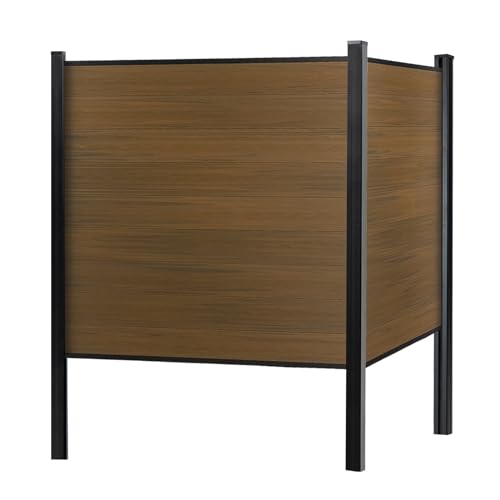
【Versatile Usage】Our modular fencing consists of 9 panels that can be connected at three different angles with metal posts, creating a 6ft * 6ft structure suitable for concealing air conditioning units, trash bins, or unsightly objects. Also ideal for yard or outdoor pool areas to ensure safety and privacy for your family or pets.

Excellent Quality: Boxwood hedge faux panels are made of High-Density Polyethylene for durability and UV protection. The leaves are removable and adjustable. Fresh-looking plastic leaves keep their evergreen look year-round. Not easily faded.
Frequently Asked Questions
Do I Need Consent to Photograph Neighbor’s Property for Insurance Claims?
Ironically, while you’re documenting damage, I’d say you don’t need consent if I’m photographing from my property or public spaces across property boundaries. However, insurance policies often require clear documentation, so I’ll avoid trespassing while capturing necessary evidence.
Are Security Cameras Pointing at Shared Driveways Legally Permitted?
Yes, I can legally point security cameras at shared driveways since there’s no reasonable privacy expectation in common areas. However, I’ll adjust camera angles to avoid capturing private spaces like vehicle interiors, respecting applicable privacy laws.
Can I Photograph Neighbor’s Property to Document Code Violations?
Like town criers once publicly announced violations, you can photograph visible code violations from public areas or your property without privacy concerns. I recommend documenting evidence carefully—avoid trespassing, capture only what’s visible, and photograph objectively for authorities.
Do Photography Laws Differ for Rental Properties Versus Owned Homes?
No, I don’t see photography laws differing between rentals and owned homes. Property rights regarding exterior photography remain identical, and privacy laws apply equally regardless of ownership status. Both properties receive the same legal protections from unauthorized imaging.
What Damages Can I Claim if Neighbor Illegally Photographs My Property?
If your neighbor’s illegal photography constitutes invasion of privacy, I’d claim emotional distress damages and potentially punitive awards. For instance, a California homeowner recovered $50,000 after proving intentional intrusion. Potential consequences include injunctions stopping future violations.