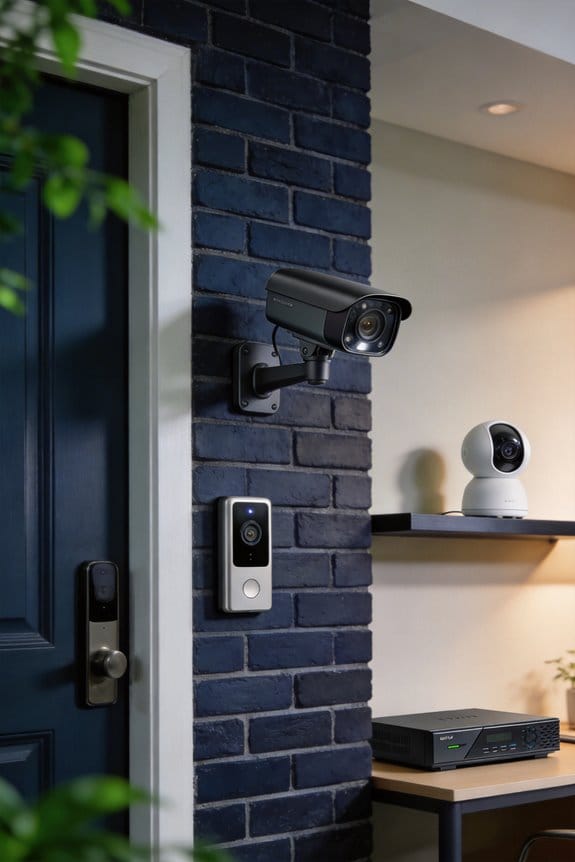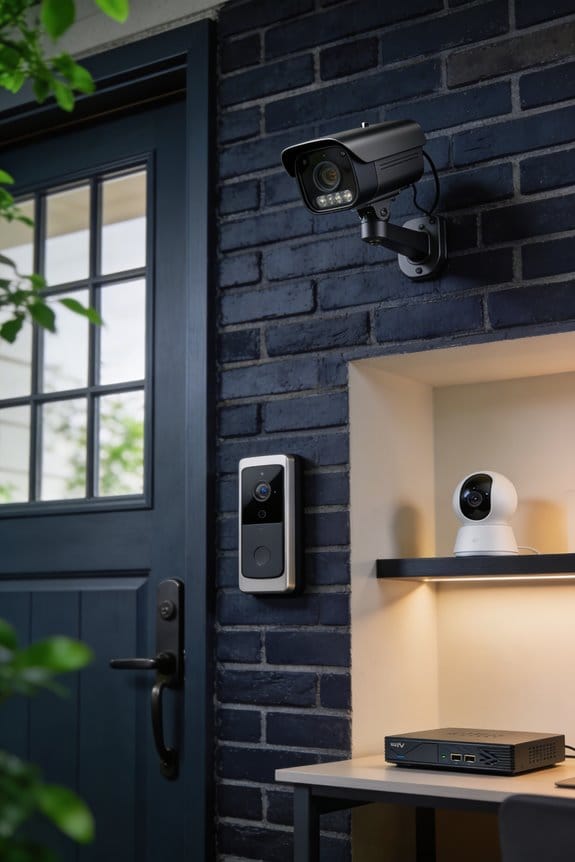


I’ve watched Edge AI cameras transform surveillance in 2026 by processing video data locally through specialized neural processors like the Hailo-8, which delivers 26 TOPS while consuming minimal power. This shift eliminates the 30-50% cloud costs, single-digit millisecond latency, and data breach risks that plagued traditional systems. By keeping sensitive footage on-premises, you’ll maintain compliance with privacy regulations while achieving real-time threat detection in seconds. The following sections explain how this hardware revolution makes truly autonomous security systems possible.
Key Takeaways
- Edge AI cameras eliminate cloud lag by processing data in real-time locally, enabling immediate threat detection and faster response in critical security situations.
- Local processing reduces cloud service costs by 30-50% while minimizing bandwidth usage by transmitting only essential metadata and alerts.
- On-premises data processing keeps sensitive footage within facilities, reducing interception risks and ensuring compliance with privacy regulations.
- Specialized processors like NPUs consume 10-20 times less power than GPUs while enabling continuous complex analytics at the edge.
- Cloud-based systems face vulnerabilities including hacking risks, connectivity dependence, slower speeds, and potential compliance issues with data protection laws.
Why Edge AI Cameras Are Replacing Cloud Video Systems in 2026

Is your current surveillance system struggling to keep up? If so, you’re not alone. Many people are realizing that while cloud video systems were the go-to for years, edge AI cameras are now stepping in and really making a difference in 2026. Here are a few reasons why this shift matters to you.
First off, Edge Intelligence tackles that pesky lag time that comes with cloud setups. Instead of waiting hundreds of milliseconds for your data to ping back from a server, you can get real-time threat detection in mere seconds. Think about how crucial it is to respond quickly in a security situation—this change can make a big difference.
Next, let’s talk about money. Relying on cloud services can add up fast, with monthly fees climbing into the hundreds of dollars per camera. By processing footage right on the device, you’re not just saving on those fees, but you’re also cutting down on bandwidth use. You’ll only transmit the important data, leaving a lot of unnecessary footage behind.
You’re probably wondering what happens to your sensitive footage. With on-premises processing, it stays within your facility, which means you’re addressing privacy concerns and cutting down interception risks. This is a huge relief in today’s security-focused world.
Here’s the kicker: the edge AI hardware market is growing fast, jumping from USD 27.9 billion in 2026 to a projected USD 32.8 billion in 2026. That’s a clear sign that businesses are catching on and making the switch—are you ready to do the same?
In short, edge AI cameras are changing the way you can think about security. They reduce lag, cut unnecessary costs, and enhance privacy. So, are you ready to take a closer look at what edge AI can do for your surveillance needs?
Recommended Products

64 CHANNEL SECURITY CAMERA SYSTEM: This system has 48pcs 4K/8MP 2.8mm fixed lens PoE IP cameras with built-in microphone, IP67-rated waterproof for indoor and outdoor use. The 4K 64CH NVR of this system comes with 2X 8TB hard drive. it has 8 SATA port to expand to total 80TB storage space.

Ultra-Fast Intel Ultra 9 275HX Processor: With a 65W TDP and a cutting-edge design featuring 8 Performance cores and 16 Efficient cores, this next-gen silicon delivers unmatched frame rates in esports and AAA titles. AI acceleration in select creative applications further boosts performance, enabling faster rendering and smoother workflows

Ultra-Fast Intel Ultra 9 275HX Processor: With a 65W TDP and a cutting-edge design featuring 8 Performance cores and 16 Efficient cores, this next-gen silicon delivers unmatched frame rates in esports and AAA titles. AI acceleration in select creative applications further boosts performance, enabling faster rendering and smoother workflows
NPUs and Hailo-8 Chips: The Hardware Making Edge AI Cameras Viable

Have you ever wondered what makes edge AI so effective in surveillance cameras? The secret lies in specialized processors that aren’t just new—they’re critical for making local decision-making viable.
Neural Processing Units (NPUs) have seriously changed the game at the hardware level. These chips are incredibly efficient, consuming 10-20 times less power than the typical GPUs. They provide faster processing speeds and tackle the heat and energy issues that have made deploying AI at the edge difficult in the past.
Take the Hailo-8 as an example. It operates at 26 TOPS while only using about 2.5 to 3 watts. So, what does that mean for you? It means that cameras can now run complex object detection and facial recognition models continuously without the risk of overheating or needing extra power sources. This shift allows manufacturers to pack more functionality into their surveillance hardware for real-time analysis.
Here’s the trick: if you’re looking into edge AI cameras, pay attention to what processors are being used. The differences can really shape how effective your camera system will be. Honestly, the ability to do so much with so little power can open up a world of possibilities for smart surveillance.
To sum it up, NPUs like the Hailo-8 are paving the way for smarter edge AI in cameras. What capabilities are you looking for in your surveillance systems?
Recommended Products
![[121° Wide Angle+2-Way Audio] Hiseeu 4K Security Camera System,8pcs 5MP PoE Security Cameras Wired Outdoor,Human Vehicle Detect,Color Night Vision,NVR 16CH Expandable w/3TB HDD for 24/7 Record](https://m.media-amazon.com/images/I/41WuVpGDFrL._SL500_.jpg)
【𝟰𝙆 𝟴𝙈𝙋 𝟴 𝙋𝙤𝙧𝙩𝙨 𝙋𝙤𝙀 𝙉𝙑𝙍𝟭𝟲𝘾𝙃 𝙀𝙭𝙥𝙖𝙣𝙙𝙖𝙗𝙡𝙚】This NVR built-in 8 PoE Ports (4K 8MP), can power on 8 PoE cameras at the same time,can extend up to 16 Channels with an extra PoE switch(not included), Max can take up to 16Pcs 4K 8MP Cameras

【Red & Blue Flashing LEDs】This outdoor wireless security camera system features a red and blue strobe light that activates when the PIR sensor detects motion. Whether it's day or night, the red and blue lights will flash for 15 seconds upon sensing any movement, providing a clear visual alert to potential intruders. This added security feature enhances the wifi security camera's ability to deter unwanted activity around your property.

【2-Way Audio】The wireless home security cameras are equipped with advanced noise-canceling microphones and speakers, ensuring clear communication with the camera. This allows you to stay in touch with your family while you're away. Through real-time audio communication, it brings the warmth and security of home to you, no matter where you are.
How Edge AI Cameras Cut Latency to Single-Digit Milliseconds

When it comes to security and monitoring, waiting on data to travel to the cloud can feel like an eternity. Imagine seeing a potential threat unfold, only to realize it’s taking too long for that information to come back to you. That’s where edge AI cameras come in—they process data right where they are, cutting down the delay significantly. Instead of waiting for hundreds of milliseconds or even longer, you can get alerts in just a few milliseconds.
This quick response time isn’t just a neat feature; it can be crucial in certain situations. For instance:
- Manufacturing: Cameras on fast assembly lines spot defects immediately, which can boost production by up to 25%. You’re making decisions on the spot, ensuring quality without missing a beat.
- Autonomous Vehicles: These cameras help detect obstacles at high speeds. Cloud delays? They could lead to serious accidents, and that’s not something anyone wants to deal with.
- Surveillance: With quick local processing, you can identify threats before they escalate, changing the way you handle security. It’s all about being proactive rather than reactive.
So, why does this matter for you? Whether it’s in your business or your home, making quicker decisions can keep everything running smoothly and safely.
Frankly, having real-time responses can make a world of difference in safety and efficiency. So, consider how an edge AI camera might change the game for your monitoring needs. It’s worth thinking about the impact that speed can have. What would you do if you could act on information right away?
Recommended Products

➤ AMD Ryzen 7 7730U | 8-Core Power for Work & Play: Dominate multitasking with the Ryzen 7 7730U’s 8-core, 16-thread performance. Edit 4K videos while streaming on Twitch, or run CAD software alongside 50+ Chrome tabs—no lag thanks to 4.5GHz Turbo Boost and AMD Radeon graphics. Ideal for creators and gamers needing desktop-level power in a portable design.

Ultra HD 4K/ 8MP 32 Channel NVR with (32) H.265+ HD 2160P 4K PoE Outdoor/Indoor Full-time Colro Night Vision Two Way Audio IP Cameras with Red & Blue Alarm Lights

Game-Changing NVIDIA RTX 5070Ti with DLSS 4: Step into the future of gaming with the NVIDIA GeForce RTX 5070Ti. Its revolutionary DLSS 4 technology uses AI to generate frames and supercharge your FPS while maintaining pristine image quality. Combined with advanced ray tracing, you get a visually stunning and incredibly responsive gaming experience that keeps you locked in the action.
Edge AI Cameras Cut Cloud Costs 30-50% With Local Processing
Cloud storage fees can really sneak up on you, especially if you’re managing multiple cameras that are uploading footage non-stop. Ever think about how much that can add up? Edge AI cameras might be the solution you need. They process data right on the device, which can cut those cloud costs by a good 30-50% compared to the usual setup that relies heavily on cloud storage.
When you analyze video on the camera itself, you only send over the important stuff—like metadata and alerts—rather than streaming all that raw footage. This simple switch lowers both bandwidth use and storage needs. Here’s the trick: cameras with built-in neural processors can spot defects, recognize faces, and detect anomalies without ever needing a connection to the cloud.
For anyone into quality control applications, here’s a point worth noting: this setup can achieve a return on investment within 6-9 months. You’ll see it through reduced rework costs and those pesky monthly fees per camera, which can often be in the hundreds.
So, why does this matter? It’s that extra peace of mind knowing your budget isn’t being drained as quickly, all while keeping your operations running smoothly. Honestly, it’s an option worth considering if you want to stay ahead without overspending.
In a nutshell, edge AI cameras can keep your cloud costs in check while providing robust data processing right where you need it. Have you thought about how much you could save by making the switch?
Recommended Products

4K Ultra HD & Color Night Vision: Our ZOSI 32 Channel 4K Security Camera System delivers crisp and clear video quality with its cutting-edge 4K CMOS sensor. Capture every detail in vibrant colors, superior contrast, and even in low-light conditions. Up to 100ft night vision, so you can see clearly even at midnight. Experience the ultimate level of image clarity for your home or business surveillance needs.

【Next-Level Speed & Power with Intel Core Ultra 7】Experience smooth multitasking, fast content editing, and high-performance entertainment with the latest Intel Core Ultra 7 processor and advanced DDR5 RAM. This HP All-in-One Desktop Computer is designed to boost productivity with built-in AI acceleration for modern workloads.

ALL-WHEEL DRIVE (CONQUER 70% SLOPES): Built for the most extreme terrains. The X7 features a rugged AWD chassis and deep-tread off-road tires, delivering immense traction to effortlessly climb steep hills up to 35° (70% slope) and navigate muddy, uneven ground without slipping.
How Edge AI Cameras Keep Sensitive Video Data On-Premises
Have you ever worried about where your sensitive video data actually ends up? It’s a common concern for many businesses. Beyond saving money, there’s a pretty solid reason to keep your video processing local: security and privacy regulations often dictate that sensitive footage must never leave your facility.
Edge AI cameras do something pretty neat. They process video directly on the camera itself and store the results in your own storage systems. This means raw footage never gets sent to external servers, keeping your production data, personnel movements, and proprietary processes securely within your network. It significantly cuts down the risk of interception during transmission.
Try this: consider implementing a secure edge data lake for your operations. It’s a way to maintain all your analysis right where you need it, helping you stay compliant and still get real-time insights. This is particularly critical for industries dealing with classified information, protected health data, or trade secrets—places where sending info to the cloud just isn’t worth the risk. Simply keeping your video data processing local means you’re taking responsible steps for cybersecurity.
So, why does this matter? By aligning your camera deployment with these local processing solutions, you keep sensitive video data right in your control. No more worrying about breaches or unauthorized access to your footage.
Frequently Asked Questions
What Happens When Edge AI Cameras Lose Internet Connectivity?
I’ve noticed cameras keep working because they process locally—coincidentally solving internet outages. Their offline functionality means I still get real-time alerts and recordings. Data redundancy guarantees nothing’s lost until connectivity returns, maintaining complete security coverage.
Can Existing Surveillance Cameras Be Upgraded With Edge AI Capabilities?
I’ll explain that most existing cameras can’t be upgraded since edge AI requires specialized processors like NPUs. You’d need camera upgrades with dedicated edge processing hardware—retrofitting older models isn’t practical, so new installations are typically necessary.
How Do Edge AI Cameras Handle Software Updates and Security Patches?
I’ll explain how edge AI cameras manage updates through robust software management systems that deploy over-the-air patches remotely. Manufacturers implement layered security measures including encrypted firmware updates, rollback capabilities, and zero-trust architectures to protect against vulnerabilities while maintaining operational continuity.
What Is the Typical Lifespan of Edge AI Camera Hardware?
Like smartphones caught in tech’s relentless tide, I’ve found edge AI cameras typically last 5-7 years before camera durability meets its match against technology advancements—though regular software updates can extend their useful life beyond initial hardware limitations.
Do Edge AI Cameras Require Specialized IT Staff for Deployment and Maintenance?
I’ll be honest—while edge AI cameras simplify some aspects, you’ll face deployment challenges requiring IT expertise for network integration and security. However, I’ve found effective maintenance strategies often involve vendor support and automated monitoring tools.