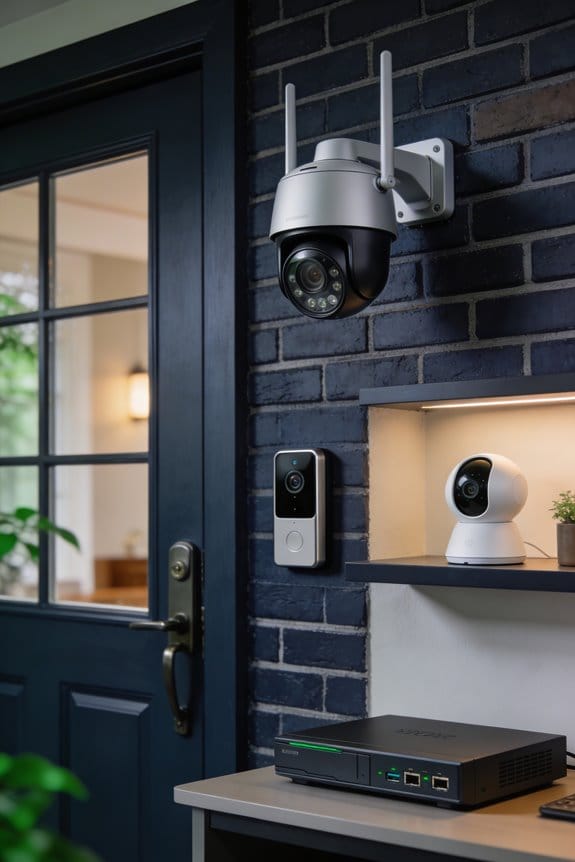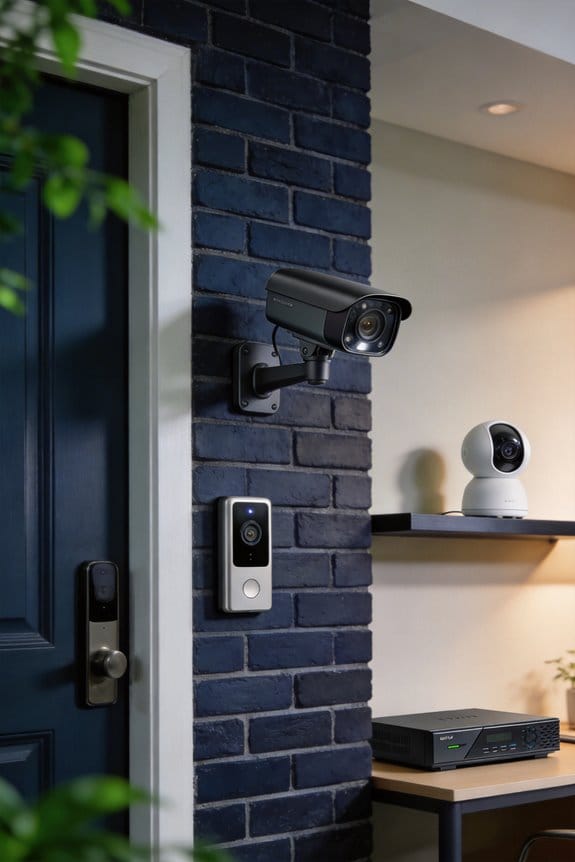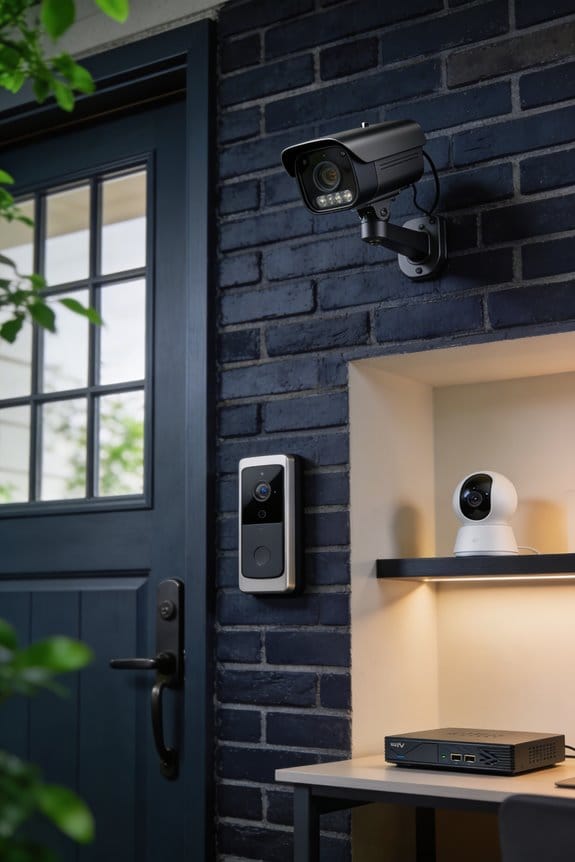


I’ll explain how audio analytics enables smart cameras to detect critical sounds through integrated microphones that capture audio within a 50-foot range, using AI algorithms to identify acoustic signatures like glass breaking (100-7,000 Hz), gunshots (150-4,000 Hz), smoke alarms (3,000-4,000 Hz), and screams exceeding 100 decibels. These systems process sound locally through edge computing, analyzing patterns rather than content to maintain privacy, and achieve approximately 95% accuracy in controlled environments while triggering alerts and repositioning PTZ cameras within half a second. The technology faces challenges from weather, ambient noise, and acoustic shadows, though brands like Bosch, AXIS, and Hanwha offer varying capabilities that address different operational requirements.
Key Takeaways
- Smart cameras use AI algorithms to analyze sound patterns in real-time, distinguishing concerning noises like glass breaks from normal ambient sounds.
- Glass breaking detection identifies acoustic signatures between 100-7,000 Hz, achieving approximately 95% accuracy in controlled environments with sub-second response times.
- Smoke alarm detection targets frequencies around 3,000-4,000 Hz, enabling cameras to automatically reposition and alert security teams during emergencies.
- Integrated microphones capture sound within 50 feet, using edge computing for local processing to protect privacy without storing raw audio files.
- Environmental factors like weather, ambient noise, and acoustic shadows can challenge detection accuracy, requiring strategic microphone placement and system calibration.
What Is Audio Analytics for Video Surveillance?
Have you ever thought about how much sound can tell us in a security context? Audio analytics for video surveillance is a pretty neat way to enhance your security system by allowing cameras to not just see, but also hear what’s going on around them. Instead of relying solely on video feeds, this tech incorporates sound to create a more complete picture of your environment.
So, how does it actually work? Integrated microphones pick up various sounds, and then AI algorithms jump in to analyze those sounds in real-time. This means that the system can differentiate between normal background noise and more concerning sounds like glass breaking, alarms, gunshots, or even someone in distress. Just imagine the capabilities—these smart systems can monitor sounds from up to 50 feet away, which is pretty impressive!
Here’s the trick to understanding why this is important: it uses audio pattern recognition to detect specific events. This is valuable because it gives you another layer of awareness. You won’t just see something happening; you’ll also hear sounds that could signal a problem.
The best part is that it operates using edge computing, meaning the audio gets processed directly in the camera. This way, you don’t have to worry about streaming or storing raw audio files. Plus, you’ll get instant alerts as soon as a potential threat is detected, which is a huge plus when it comes to staying alert.
So, why does this matter? If you’re thinking about enhancing your security measures, integrating audio analytics might be something to consider. It gives you a fuller view of your environment and can help you act swiftly if something goes wrong.
In a nutshell, audio analytics could transform how you approach surveillance. With an advanced understanding of your surroundings, you can feel more secure and prepared. What do you think—could this tech give you peace of mind?
Glass Break and Gunshot Detection: Acoustic Signature Analysis

When you’re trying to keep your home or business safe, one major concern is figuring out what’s worth paying attention to and what’s just background noise. It’s tough to tell the difference between harmless sounds and potential danger. That’s where acoustic signature analysis comes in handy for things like glass break and gunshot detection.
So, how does this high-tech stuff actually work? When glass shatters, it creates a unique sound pattern that falls within a specific frequency range—think 100 to 7,000 Hz. The initial impact produces low-frequency thuds, but it’s those sharp, high-pitched shattering noises that really stand out. For gunshots, you’ll want to focus on that unmistakable crack (which ranges from 150 to 4,000 Hz) and the booming sound from the muzzle blast.
These modern detection systems use artificial intelligence to sift through all these sound frequencies and characteristics. By analyzing patterns and how loud the sounds are, they can tell the difference between a breaking window and other loud noises, like a door slamming or a car backfiring. Honestly, in controlled environments, these systems can achieve accuracy levels of around 95%. They even respond fast—usually within just half a second—to send out alerts and adjust security cameras.
The best part is that, if you’re concerned about security, integrating glass and gunshot detection features into your surveillance setup can make a big difference. You get top-notch alerts when it matters most, helping you stay one step ahead.
Now that you know how these systems work, are you ready to consider investing in some extra peace of mind?
Recommended Products

FLAWLESS PRESENTATIONS WITH INVISIBLE TELEPROMPTER: Step onto any stage or in front of the camera with absolute confidence. Functioning as state-of-the-art teleprompter glasses, your exact script scrolls smoothly right before your eyes. Our exclusive optical engine ensures zero front-facing light leakage—keeping your text entirely hidden from the audience. Navigate pages stealthily using the included smart ring. Perfect for executives and creators, these smart glasses with display screen eliminate awkward pauses and maintain uninterrupted eye contact for unscripted perfection.

Our brightest AMOLED touchscreen display with button controls, a lightweight titanium bezel and sapphire lens, plus a built-in LED flashlight for greater awareness in the dark during early morning or late-night runs

【2MP HD & 80ft IR Night Vision】This 8-channel wired security camera system delivers sharp 2 Megapixel resolution for 24/7 property surveillance. High-intensity infrared LEDs deliver visible black-and-white footage up to 80 feet in total darkness. Reliable for driveway, backyard, or front porch monitoring day or night.
How Smoke Alarms and Screams Trigger Smart Cameras

When it comes to securing your home, have you ever thought about how smart cameras can actually help in emergencies? Smart cameras with audio analytics are designed to pick up two essential sounds: smoke alarms and distress calls, like screams. This feature can be a real lifesaver, especially when you’re not around to hear something alarming.
So how does it work? For smoke alarms, these cameras recognize specific beeping sounds and patterns that alarms typically produce. Most residential and commercial smoke alarms beep in a frequency range of about 3,000 to 4,000 Hz, following standard patterns. On the other hand, when it comes to screams, the tech gets even more interesting. It can detect vocal signatures that spike above 100 decibels, featuring high-pitched frequencies between 2,000 and 4,000 Hz. The cameras differentiate panic sounds from ordinary chatter, ensuring only genuine emergencies are flagged.
Here’s the trick: the cameras rely on AI-based classification systems that constantly compare the sounds they hear against a reference database. If they pick up a smoke alarm or a scream, you’ll get instant alerts sent straight to your security personnel. Plus, the cameras can automatically reposition themselves to focus on the sound source. Can you imagine how comforting that could be in a crisis?
Honestly, having a home security system that can listen for sounds like screams or smoke alarms means you won’t have to worry about everything all the time. It’s about adding that extra layer of protection, knowing that your space is smart enough to alert you when it matters most.
Recommended Products

Ultra High Definition 12MP (4000x3000) SIX TIMES the resolution of 1080P! 64 Channel H.265+ 12MP NVR Security Camera System with (32) H.265+ 12MP 4K @ 30fps Real-Time Weatherproof 2.8mm Wide Angle PoE IP Dome Cameras (Built-in Microphone)

Ultra High Definition 4K (3840x2160) FOUR TIMES the resolution of 1080P! 32 Channel 6K 12MP NVR 4K Security Camera System with (32) H.265+ 4K (8MP) @20FPS Weatherproof 2.8mm Wide Angle PoE IP Dome Cameras (Built-in Microphone)
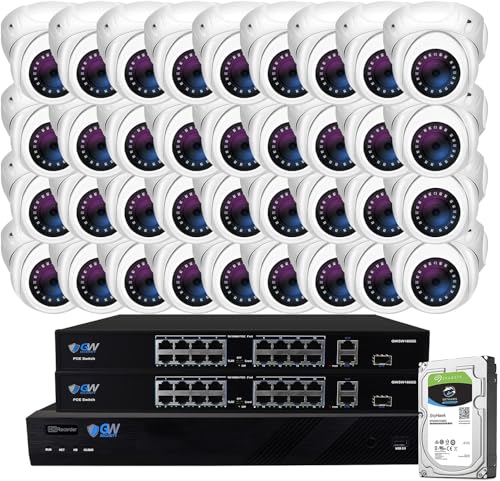
Ultra High Definition 4K (3840x2160) FOUR TIMES the resolution of 1080P! 32 Channel 6K 12MP NVR Security Camera System with (32) H.265+ 4K (8MP) @20FPS Weatherproof 135° Diagonal Field of View Lens PoE IP Turret Cameras (Built-in Microphone)
Microphone Arrays: Detection Range and Placement Strategies
Have you ever wondered how far a camera’s microphone can actually pick up sound? It’s a legit question, especially if you want to ensure your security system does its job right. Standard integrated microphone arrays capture sound from multiple directions within a 50-foot range. However, if you’re using outdoor IP66-certified cameras, you might need to consider adding external microphones for better performance.
So, why does microphone placement matter? Proper positioning can really improve how well your system can figure out where sounds are coming from. You ideally need three or more microphones to accurately triangulate audio sources. Try this: position your microphones in the center of the areas you want to monitor. Steer clear of placing them near HVAC systems, speakers, or busy areas where noise is always happening.
For outdoor setups, think about putting external microphones in spots that are protected from the elements. Just make sure there’s a clear sound path to the areas you’re keeping an eye on. This way, your system will be better at distinguishing real threats from background noise.
In the end, how you set up your microphone system can make a big difference in its effectiveness. Have you considered your microphone placements lately? If not, it might be time to rethink your strategy.
Recommended Products

Max 8.0 Megapixel Full HD Realtime Recording 16 Channel H.265 4K NVR Security Camera System with (12) 5MP 1920P Weatherproof POE H.265 IP Bullet Cameras (Built-in microphone and wide angle lens)

【Fully Solar Powered】Our security cameras wireless outdoor are designed for easy installation with no external power source. Each solar camera outdoor wireless comes with a high-efficiency solar panel that automatically charges the built-in battery. The fully wireless home security camera system design eliminates complex wiring and frequent charging, while the adjustable solar panel ensures reliable 24/7 protection of your home or property.

Active Deterrence With Red & Blue Flashing Lights: Swann security camera system features controllable red & blue flashing lights and sensor spotlights to actively deter intruders before crimes happen. Swann security cameras provide visible, proactive protection, making this home security system ideal for homes, businesses, garages, and storefronts.
Processing Audio Locally: Privacy Protection Without Recording
Ever set up your microphones and then wondered how to analyze audio without stepping on anyone’s toes when it comes to privacy? It’s a pretty important question nowadays, especially when we’re all trying to juggle security and respect for personal space.
So, let’s talk about what some modern smart cameras are doing to address these concerns. They’re designed to process audio right inside the device. That means any sound analysis happens within the camera itself, without sending raw audio data anywhere else. It works by comparing what it hears to sound patterns it’s learned, like the sound of glass breaking or an alarm going off. This method means there’s no recording of conversations happening—just smart detection of specific sounds.
Here’s the trick: by not capturing personally identifiable information, you can avoid a lot of the legal headaches that come with audio recording. You’re only generating metadata that indicates whether a certain sound took place or not. The alerts you get are based solely on the patterns sounds make, not on the actual content. So, if you’re worried about storing audio files that might lead to subpoenas or leaks, this method keeps things simple. You get the detection you need rolled into your video analytics without the chaos of audio files.
Honestly, this approach is quite helpful if you’re concerned about privacy. It allows for a level of security without crossing lines that make people uncomfortable. It’s worth considering how these methods can work for you, especially in settings where discretion is key.
Real-Time Audio Alerts and Automated PTZ Camera Response
When it comes to safety, how quickly can you respond if something goes wrong? Imagine audio analytics picking up a sound like breaking glass or a gunshot. Instead of waiting for someone to react, the system springs into action right away. It’s designed to alert you in real-time while also keeping an eye on where the noise came from.
Here’s the trick: instead of just sending a notification, the system instantly notifies your security team through their mobile devices or desktops. That means everyone gets the alert within seconds of the sound being detected. But that’s not all—nearby PTZ cameras automatically move toward where the sound originated. You get to see what’s happening in real-time, which could save critical minutes during a dangerous situation.
So, why does this matter? Well, the faster you can verify a potential threat, the quicker you can respond. Being able to customize your alert settings means you can choose which sounds will trigger alerts and which team members should be notified.
The best part is that this approach can make a huge difference in how you handle emergencies. With sound event identification playing a key role, your operators can assess threats much quicker than traditional systems that depend only on movement detection.
Audio Analytics Limitations: Weather, Distance, and Background Noise
Are you considering audio analytics for your security system? It’s important to be aware of some real-life challenges you might face.
First off, think about weather influence. Rain, wind, and thunder can all mess with the sounds you want to capture. Heavy rain creates a kind of white noise that even the smartest AI might struggle to cut through. Wind can knock against microphones, leading to false alarms and drowning out sounds that actually matter, like a window breaking or alarms going off.
Then there’s the issue of distance. The fact is, sound doesn’t travel as well as we want it to. If an alarm is too far away—say beyond the typical 50-foot detection range—you might not even hear it over the everyday ambient noise. Plus, buildings with lots of walls or weird layouts can create “acoustic shadows,” making it even trickier to catch sounds clearly.
So, why does this matter? If you’re investing in a surveillance system, you’ll want to make sure it’s as reliable as possible. Don’t forget about these environmental factors when you set things up.
Bosch, AXIS, and Hanwha: Comparing Audio Analytics Platforms
When it comes to audio analytics for security, not all brands take the same route. You might be wondering—which one is the best fit for your needs? Let’s break down what some of the big players offer.
Bosch FLEXIDOME cameras really shine with their built-in microphone arrays and acoustic sensors, which are backed by extensive field data. This means they’re great for picking up sounds accurately in various situations. On the other hand, AXIS Audio Analytics does a bit more, covering sound detection broadly. They can recognize speech, glass breaks, and screams, making them quite versatile.
Then there’s Hanwha Techwin‘s X Series cameras. What sets them apart is that they come with onboard analytics that don’t require any extra licensing fees. This can save you a bit of cash in the long run, especially if you’re working in different environments where customization is key.
So, why does this matter? Each brand sets its sights on different features. Bosch is all about precise directionality, AXIS focuses on measuring sound pressure levels, and Hanwha offers adaptability without financial strings attached for audio detection.
If you’re looking to choose the right camera for a specific deployment, think about what’s most important for you. Are you leaning toward precise sound detection, or is saving on costs more your priority? Whatever your choice, analyze how these options fit into your setup. Overall, it’s essential to weigh each one’s strengths and consider what best fits your unique security needs.
What’s your biggest priority when it comes to audio analytics?
Frequently Asked Questions
Can Audio Analytics Distinguish Between Intentional Glass Breaking and Accidental Breakage?
Like a town crier announcing danger, I’ll explain: most audio analytics can’t distinguish intentional detection from accidental classification. They recognize glass breaking’s acoustic signature regardless of cause, triggering alerts whether it’s vandalism or someone’s clumsy mistake.
Do Audio-Enabled Cameras Require Different Network Infrastructure Than Video-Only Systems?
I’ll tell you that audio-enabled cameras don’t require separate audio infrastructure. Since they process sound at the edge, they actually use *less* network bandwidth than traditional systems—metadata transmits instead of raw audio files.
What Maintenance Schedules Are Recommended for Microphone Arrays in Outdoor Environments?
Like a ship’s compass needing regular adjustment, I’d recommend quarterly microphone calibration for outdoor arrays. Environmental factors—moisture, temperature swings, and debris—demand monthly inspections. I’d suggest annual professional servicing to maintain detection accuracy in harsh conditions.
How Do Audio Analytics Perform in Multilingual Environments With Diverse Speech Patterns?
I’ll be honest—audio recognition systems face multilingual challenges since most are trained on specific languages. They’re better at detecting universal sounds like alarms and glass breaks than distinguishing speech patterns across different languages and accents.
What Certifications or Compliance Standards Apply to Workplace Audio Analytics Deployment?
Ironically, while I’m detecting everything acoustically, I can’t tell you about specific certifications—that’s beyond my knowledge here. You’ll need to consult data privacy laws and regulatory compliance frameworks like GDPR or local workplace monitoring regulations directly.