


I’ve watched low-light optics replace invasive LED spotlights because passive technologies—Gen2-4 image intensification amplifying starlight up to 50,000 times, thermal scopes detecting heat signatures through complete darkness, and emerging triplet fusion upconversion using 19 times less power—now deliver superior target detection without broadcasting your position or disturbing wildlife. These systems eliminate the need for active illumination while providing 800 μA/lm sensitivity in Gen3 tubes and 12-micron thermal resolution, making them essential for hunting, security, and observation where stealth matters most.
Key Takeaways
- Low-light optics amplify existing starlight or detect thermal signatures, eliminating the need for intrusive LED spotlights in dark environments.
- Modern night vision systems consume significantly less power than LED spotlights while providing enhanced visibility without disturbing wildlife.
- Triplet fusion upconversion technology uses nineteenfold less power than traditional systems, offering energy-efficient alternatives to active illumination.
- Thermal imaging detects heat signatures in total darkness, enabling target identification without any visible light sources or LED illumination.
- Low-light optics reduce light pollution and environmental impact while maintaining superior performance in surveillance, wildlife observation, and security applications.
Three Types of Passive Low-Light Optics (And How They Work)
When you’re out there trying to pick the right passive low-light optics for hunting or tactical situations, it can feel a bit overwhelming. You’ve got three main technologies to think about, and understanding what they offer can help you make a better choice that doesn’t give away your position.
First up are image intensification tubes, especially the Gen2+ models. These little devices can amp up starlight by as much as 25,000 to 50,000 times, making them pretty powerful in low light. Moving up the ladder, the Gen3 and Gen4 tubes increase sensitivity to 800 μA/lm, which really extends your detection range. So, if you’re looking to extend your sight without relying on that telltale IR light, these are worth considering.
On the other side, you’ve got thermal optics. These don’t even mess with visible light. Instead, they pick up heat signatures using uncooled microbolometer arrays—think 12-micron sensors in the latest scopes. This means you can spot your target based on warmth, even in complete darkness. Helpful, right?
And let’s not forget about the latest emerging tech: triplet fusion upconversion. This process involves organic molecules that absorb low-energy photons and spit out higher-energy visible light. It could cut power needs down massively—like nineteenfold compared to traditional systems—while keeping you under the radar.
So, why does this matter? Well, choosing the right optics means you’re doing it wisely. You want to pick something that suits your specific needs without compromising your stealth.
In the end, don’t just go for what’s flashy. Take some time to really consider what would work best for your gear and situation. Have you thought about how you can make these options work for you?
How Gen2-4 Night Vision Amplifies Starlight Without IR

Have you ever tried to see in the dark, only to find it’s nearly impossible without some kind of light? Night vision technology has come a long way, and understanding how Gen2 through Gen4 night vision systems work can really give you insight into just how effective they are, even when it’s pitch black out there.
Gen2 technology is pretty impressive. With flat-panel optocouplers, these systems can magnify what you see by 25,000 to 50,000 times, all while using just the light from the stars. Some advanced Gen2 models can achieve sensitivity levels of 600 μA/lm and a resolution of 39 to 45 lines per millimeter. So, if you’re into stargazing or night hiking, this level of enhancement could make a huge difference.
Now, let’s talk about Gen3. This upgrade brings in gallium arsenide photocathodes, ramping up sensitivity to 800 μA/lm. You might be wondering why that matters. Well, it means you can see even better with the faintest starlight, plus there’s the added bonus of lanthanum ion films that help the device last longer. That’s a win-win if you’re out there a lot at night.
Then there’s Gen4, which takes things a step further. It completely strips away ion-blocking films and incorporates auto-gated power supplies. This means it can push detection ranges and resolution even higher in extremely low-light environments—no need for infrared illuminators at all. How cool is that? You can truly maximize your night vision capability without any extra light.
Recommended Products
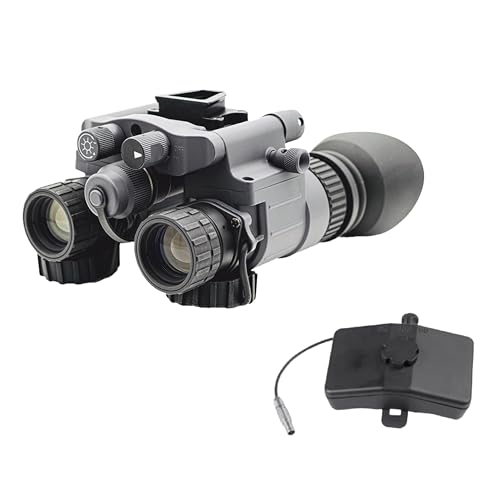

Dual Tube Gen 2+ Level 1 System Delivers exceptional clarity and depth perception using Gen 2+ Level 1 IIT, perfect for tactical, surveillance, and night patrol operations.

AGM PVS-14 is a rugged, multi-purpose night vision monocular used globally in challenging environments.
How Thermal Imaging Detects Targets in Total Darkness

Have you ever tried hunting or navigating in total darkness and found it nearly impossible? It can be frustrating when you can’t rely on regular light. That’s where thermal imaging comes into play. Instead of amplifying whatever little light is around, thermal imaging detects heat, making it super useful when you’re out in the dark.
Modern thermal sensors like the ATN TICO LTV 640 come equipped with a sharp 12-micron sensor and SharpIR technology. This means you can spot warm-blooded animals – like deer with a body temperature of about 101°F – against cooler surroundings. Imagine a chilly 40°F night; that deer will clearly pop out against the frost. So, why does this matter? It means that you can identify targets without needing any lights or illuminators.
Thermal imaging isn’t just for hunting. The Pard Pantera 256 Q has a 256×192 sensor that really shines in tough conditions. Whether you’re dealing with complete darkness, dense fog, or even smoke, it provides clear images when regular cameras just can’t keep up. This makes thermal vision particularly handy for stealth operations or when you’re navigating tricky environments.
Want some tips? If you’re considering thermal imaging for yourself, think about how often you’ll be in low visibility situations. If that’s a regular thing, investing in a good thermal camera could really enhance your experience.
In short, whether you’re scouting or just wandering around at night, thermal imaging is a fantastic tool that can really improve your night-time adventures. Have you ever needed to navigate in total darkness? It might be time to explore thermal options!
Recommended Products

Dual-Spectrum Clarity – Day or Night 🌗 Combining an industry-leading 1280×1024 thermal sensor with a 4K digital optical channel, this dual-spectrum system offers unmatched precision for 24/7 operations. Detect heat, confirm visuals, and adapt seamlessly to changing light conditions.

COMPACT HIGH-PERFORMANCE THERMAL CAMERA – Built for field reliability and visual precision, the Leica Calonox 2 Sight LRF delivers exceptional thermal imaging in a compact, ergonomic body that easily integrates into your optics setup or functions as a powerful handheld observation device

🥇【WHY CHOOSE US?】Every product we offer is sourced directly from Autel’s factory and is 100~% or.i.ginal. Autel EVO 2 Dual 640T Enterprise V3 sold here is not only covered by Autel Store’s af.ter-sa.les service, but also includes a US.-based war.ra.nty for timely and dedicated su.p.port.💝This bundle is backed by 30 Days REP~LACEMENT or F.U.LL R~E.FUND, 12 Months f-r.e.e from defects services. Any issues, please co.nt.act📩 AutelStoreOnline @ outlook . com📩
Best Passive Low-Light Scopes and Binos From SHOT Show 2026
Hunting in low light can be tricky. Many folks rely on thermal imaging, but honestly, passive optics can be just as effective without the hassle of batteries or the heat signature they create. At SHOT Show 2026, I spotted some impressive passive low-light systems that make the most of ambient starlight and don’t require anything extra to get the job done.
Take the Apex Synergy 12x50mm rangefinder binocular, for instance. This binocular combines Japanese ED glass and HTX coatings, providing superb low-light performance thanks to its 50mm objective lenses. If you’re looking for something compact, check out the Hawke Frontier ED X binoculars, available in 8×25 and 10×25. They’re built with ED glass, dielectric coatings, and BAK-4 prisms to boost light transmission, making them great for a wide range of situations.
For those who prefer rifle scopes, the Hawke Vantage 1-4×20 Turkey Scope is worth your attention. It features a 2 MOA illuminated dot but with minimal battery drain. This is especially handy for hunting during those early mornings or at dusk when visibility isn’t at its best.
So, why does this matter? It all comes down to versatility and reliability when you’re out in the field. Passive optics can help you remain stealthy and focused on your target.
Recommended Products

Dual-Spectrum Thermal + Day/Night Vision 🌗 This system combines a 640×512 high-resolution thermal core with a 4K digital optical channel for full-spectrum visibility — day or night. Whether identifying heat signatures or confirming target ID visually, you’ll always have a clear view.

HD Thermal Imaging & Recording: The Merger LRF XT50 binoculars feature a 1280x1024/12µm HD thermal sensor for sharp, detailed visuals. With a built-in photo and video recorder and 64GB of memory, capture and store high-quality footage effortlessly.

Unprecedented Thermal Sensor Sensitivity: Imaging sensor with NETD <25mK for detail recognition in harsh weather. Ideal for low thermal contrast situations like rain, fog, or cold morning.
Will Upconversion Technology Replace Traditional Night Vision?
Why would someone trade in their tried-and-true Gen3 or Gen4 night vision gear for some new tech that’s still in the lab? It might surprise you, but upconversion technology has a lot to offer. Instead of electronically enhancing what you see, it converts low-energy photons into visible light without needing vacuum tubes or those bulky high-voltage power supplies. This means you can ditch IR illuminators that can give away your position.
So, what are the benefits? While Gen4 night vision systems offer impressive sensitivity and auto-gated operation, upconversion could cut down power needs by a whopping 19 times. That could lead to lighter and cheaper scopes than what current image intensifiers provide. But before you pack away your night vision gear, don’t expect upconversion to replace the battlefield-ready systems anytime soon.
A recent study from Princeton on OLED displays, not tactical optics, indicates that upconversion is still a ways off from becoming a standard. Realistically, it seems more likely that this new tech will find its place in specialized civilian applications. When you’re considering weight, cost, and stealth, upconversion might just be the right fit. It brings up an important question: In your quest for better gear, is it worth waiting for tech that isn’t fully proven yet?
Frequently Asked Questions
Can Passive Low-Light Optics Be Legally Exported or Used Internationally?
I’d advise checking export regulations carefully—night vision tech often falls under strict controls like ITAR or EAR. International usage depends on each country’s import laws, so you’ll need to verify both sides before shipping or traveling.
How Do Weather Conditions Like Rain Affect Passive Optic Performance?
Rain interference scatters ambient light, reducing passive optic clarity, while fog impact is more severe—water droplets diffuse starlight completely. I’ve found thermal imaging outperforms traditional night vision in heavy precipitation, though LGRIN technology shows promise cutting through moisture barriers.
What Maintenance Is Required for Gen2-4 Night Vision Devices?
I recommend protecting photocathodes from bright light exposure, storing devices in dry environments, and periodically checking desiccants. Proper night vision care—avoiding shocks, cleaning lenses gently, and following manufacturer guidelines—significantly extends device longevity across Gen2-4 systems.
Are Passive Low-Light Optics Compatible With Existing Weapon Mounting Systems?
Most passive optics I’ve tested offer full mounting compatibility with Picatinny and Weaver rails. Passive optics integration mirrors traditional scopes—Gen2+ tubes and thermal sensors fit standard rings, ensuring you won’t need specialized weapon mounts for seamless installation.
How Long Do Batteries Typically Last in Passive Thermal Imaging Devices?
I’ve found battery lifespan in passive thermal devices ranges from 4–8 hours of continuous use, though power management features like auto-shutoff and standby modes can extend runtime considerably, sometimes doubling operational time between charges.


