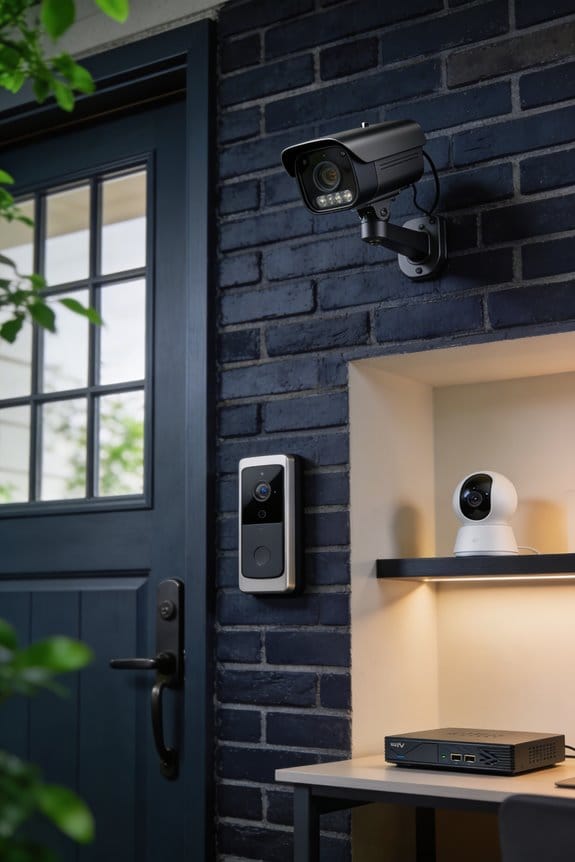
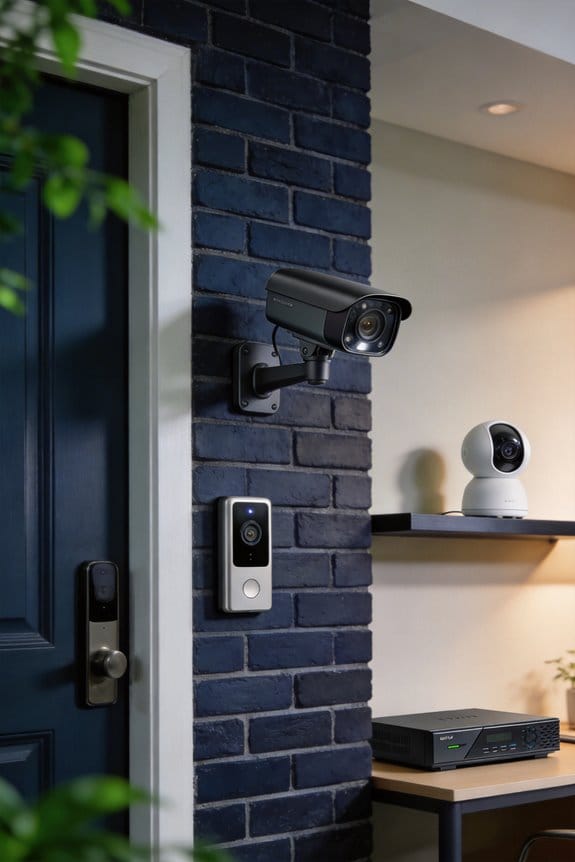

I’ve found that AI-powered object detection systems are transforming security operations by reducing false alarms by 85-99.95% through advanced convolutional neural networks that achieve approximately 93% accuracy in distinguishing genuine threats from harmless triggers like animals, weather events, or swaying vegetation. These systems analyze object size, movement patterns, and environmental context while learning your site’s normal activity over 2-4 weeks, which saves organizations up to $45,000 annually by eliminating unnecessary dispatch fees, monitoring costs, and the alarm fatigue that leads to complacency among security personnel. The sections below explain exactly how these technologies work and what improvements you’ll see during your first month of implementation.
Key Takeaways
- AI-powered object detection reduces false alarms by 85-99.95% using convolutional neural networks to distinguish real threats from routine activities.
- Advanced systems analyze object size, movement patterns, and environmental context to filter out harmless alerts with 93% accuracy.
- Multi-sensor fusion correlates data across cameras, covering blind spots and providing layered detection to reduce false alarms by 85-90%.
- AI systems learn site-specific patterns over 30 days, improving detection accuracy from 85% to 93-95% and reducing false alarms by 15-25%.
- Organizations save up to $45,000 annually by reducing false alarms, cutting monitoring costs and preventing security personnel fatigue and turnover.
Why False Alarms Cost Security Operations $150 Per Incident
Have you ever thought about how much false alarms cost your security operations? They can really drain your budget in surprising ways. Each incident tends to set you back around $150, mostly because of monitoring fees, response times, and the risk of fines from local authorities. If your monitoring center is tackling thousands of alerts every month, those costs add up quickly.
What’s frustrating is the way these expenses pile up. Security teams often find themselves spending more time chasing down non-threats, rather than focusing on the real risks in the environment. This isn’t just about the money, either. When you deal with constant false alarms, it can lead to a kind of fatigue. Think about it—if your team is bombarded with alerts that don’t mean anything, they might start to overlook or delay their reactions to genuine issues.
So, what can you do to tackle this problem? Try looking into AI-powered object detection systems. They can significantly cut down on those pesky false positives—think 85-90% reduction rates. The best part is that once you eliminate a good chunk of those false alarms, you can redirect your resources toward more strategic initiatives, proactive monitoring, and sharpening your threat assessment skills.
Ultimately, the goal is to create a more effective security operation without wasting time and money. It’s all about working smarter, not harder. Have you thought about how you could reduce false alarms in your own setup?
Proven Results: How AI Cuts False Alarms by 85–99.95
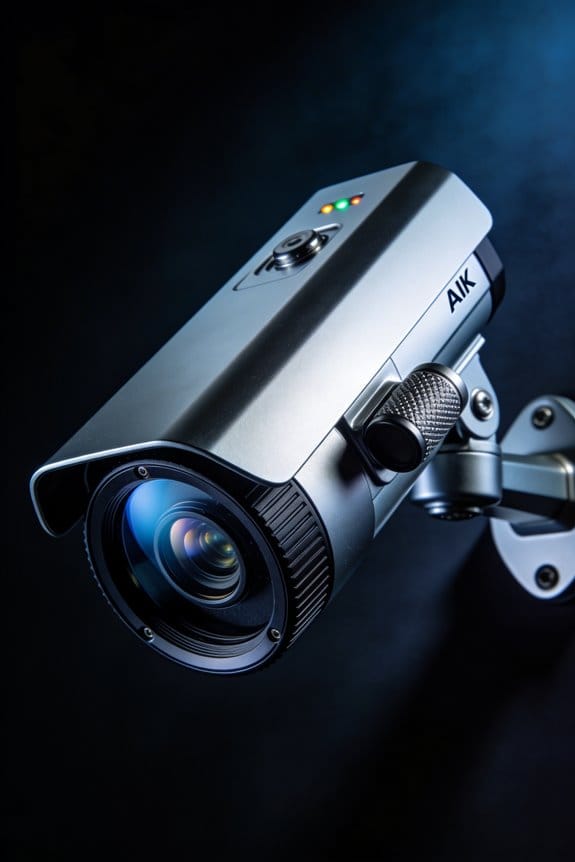
If you’ve ever dealt with security systems that ping you for every little thing—a leaf blowing by or a squirrel darting across the yard—you know how frustrating it can be. The good news is, AI-powered video analytics are stepping in to make things a lot smarter. Real-world data shows that, when configured correctly, these systems can cut down false alarms anywhere from 85 to 90%. Some advanced options, like Scylla AI, take it even further, achieving a jaw-dropping reduction of up to 99.95% in false positives.
So, how do these systems work? They rely on smart detection algorithms that use convolutional neural networks. These algorithms boast an impressive 93% accuracy in telling the difference between real threats and everyday activities. Imagine being able to focus on real issues while your AI system learns to recognize delivery trucks at loading bays during business hours—those are not threats. It’s all about getting that training right, specific to your site’s needs, so it can flag unauthorized entries while ignoring the normal hustle and bustle.
Now, here’s a little trick you might find interesting: employing a Gaussian mixture model can lead to a 25% reduction in false alarms over traditional systems. However, the best part is that multi-sensor setups tend to outshine single-technology solutions. By combining motion detection, acoustic signals, and video data from different devices, these systems correlate information more effectively, leading to fewer missed alerts.
When you’re shopping around for the right video analytics, keep these capabilities in mind. It’s not just about reducing false alarms but enhancing overall security too. How much peace of mind would you feel knowing your system is accurate and reliable?
Recommended Products

Ultra High Definition 12MP (4000x3000) SIX TIMES the resolution of 1080P! 64 Channel H.265+ 12MP NVR Security Camera System with (32) H.265+ 12MP 4K @ 30fps Real-Time Weatherproof 2.8mm Wide Angle PoE IP Dome Cameras (Built-in Microphone)

Ultra High Definition 4K (3840x2160) FOUR TIMES the resolution of 1080P! 64 Channel H.265+ 12MP NVR Commercial-Grade Security Camera System with (48) H.265+ 4K (8MP) @20FPS Weatherproof 2.8mm Wide Angle PoE IP Full-Time Color Night Vision Bullet Cameras (Built-in Microphone)

Ultra High Definition 4K (3840x2160)FOUR TIMES the resolution of 1080P! 32 Channel 6K 12MP NVR with (32) H.265+ 4K (8MP) @20FPS Weatherproof 135° Wide Angle Microphone Audio & Video PoE IP Bullet Cameras
How AI Object Recognition Separates Real Threats From Noise

How do you sift through the noise when you’re trying to ensure security at home or work? If you’ve ever been bombarded by alerts from your security camera that turned out to be nothing—like a passing squirrel—you know how frustrating that can be.
AI object recognition can help with that. Thanks to advancements in computer vision, these systems now distinguish between different types of movements, whether it’s people walking by, pets frolicking in the yard, or just the wind rustling the leaves. These models achieve impressive accuracy, often around 93%, using a method called convolutional neural networks. It’s all about recognizing patterns that matter.
You might wonder, how do these systems really know what’s important? The trick is in their noise differentiation capabilities. They take into account several things at once:
- Object size: Is it human, animal, or just a shadow?
- Movement patterns: Is the movement consistent or erratic?
- Temporal context: What time of day is it? Is this normal?
- Environmental factors: Is there something in the way, like branches swaying?
With this information, the algorithms can filter out harmless things, leaving only the alerts that need immediate attention. So, when a delivery truck pulls up during business hours, it doesn’t trigger alarms; it’s seen as routine.
The best part? This tech can adapt to specific locations and situations. That means your system learns what’s typical for your environment. It keeps things relevant and ensures you’re not kept on edge for the wrong reasons.
Recommended Products

64 CHANNEL SECURITY CAMERA SYSTEM: This system has 48pcs 4K/8MP 2.8mm fixed lens PoE IP cameras with built-in microphone, IP67-rated waterproof for indoor and outdoor use. The 4K 64CH NVR of this system comes with 2X 8TB hard drive. it has 8 SATA port to expand to total 80TB storage space.

64 CHANNEL SECURITY CAMERA SYSTEM: This system has 48pcs 4K/8MP 2.8mm fixed lens PoE IP cameras with built-in microphone, IP67-rated waterproof for indoor and outdoor use. The 4K 64CH NVR of this system comes with 2X 8TB hard drive. it has 8 SATA port to expand to total 80TB storage space.

64 CHANNEL SECURITY CAMERA SYSTEM: This system has 48pcs 5MP 2.8mm fixed lens PoE IP cameras with built-in microphone, IP67-rated waterproof for indoor and outdoor use. The 4K 64CH NVR of this system comes with 2X 8TB hard drive. it has 8 SATA port to expand to total 80TB storage space.
Why Multi-Sensor Fusion Catches What Single Detectors Miss
Ever wonder why security systems don’t just rely on one type of sensor? The truth is, each detector has its own blind spots. When you combine motion detectors, acoustic sensors, and contact switches, you’ll notice that these devices can actually cover for one another. They work together to correlate signals over time, giving you a clearer picture of what’s happening.
For instance, imagine a motion detector that triggers but doesn’t pick up any sound. The system might flag it as low confidence—like maybe just a tree branch moving in the wind. On the flip side, if you hear glass breaking followed by a door opening, that’s a different story. The combined signals increase the perceived threat level, allowing for a quicker response.
This layered approach can slash false alarms by 85-90% in systems that are set up right. Instead of relying on isolated bits of data, AI checks and validates events against information from other sensors. It creates a more reliable security network.
Try this: if you’re thinking about setting up a security system, consider how the sensors will work together. Look for systems that incorporate multiple types of detection. The best part is that this can save you time and frustration with unnecessary alerts.
Recommended Products

【4K Ultra HD PoE Camera with Audio】This 24-camera security system features 4K (8 MP) Ultra HD PoE cameras with audio. Additionally, the 4K security cameras are equipped with noise-reducing audio, ensuring you receive comprehensive audio information and enhancing the clarity of on-site details.
Rokinon 24, 35, 50, 85mm Cine-Style Lenses

Easy Time Lapse: Effortlessly create professional full HD (1080P) time lapse videos that can be shared without the need for post-editing. Upgrade the camera firmware to the latest version to ensure the maximum performance of the camera.
Site-Specific AI Learning: Teaching Systems What’s Normal
Multi-sensor fusion can really sharpen your security system, but have you ever wondered how the AI knows what “normal” looks like for your place?
During the initial weeks after you set everything up—usually two to four weeks—the AI gets to work by observing. It pays attention to daily activity patterns at your site, tracking things like movements, schedules, and even the weather conditions. It’s like gathering all the little details that make your location tick. For instance, the system will notice delivery trucks pulling up during business hours, employees coming in through the side doors as shifts change, and even the maintenance crews that show up on specified days. All this information provides a baseline for what’s acceptable.
So, what happens when something unusual pops up? Imagine an unauthorized vehicle parked in a restricted area or unexpected movement after hours. Because the AI has gathered all that information on what’s “normal,” it can distinguish between usual operations and potential threats. That means you get alerts about real issues, not just routine activities.
If you’re thinking about using AI in your security system, the best part is that you won’t have to guess what’s happening day-to-day. It does the homework for you, so you can focus on running your business. Isn’t that a relief?
In short, site-specific learning means your security system gets smarter over time by learning what your place is all about. How might that change the way you think about security?
Accurate Detection in Fog, Rain, and Darkness
Wondering why your security cameras can’t keep up when the weather goes south? Fog rolling in, rain pouring down, or darkness falling can really throw a wrench in the works. Traditional systems often end up sending out false alarms for every little raindrop, leaving you—or your security team—overwhelmed by unnecessary alerts.
What you really need are modern, AI-based cameras. These new systems are smart enough to tell the difference between actual threats and whatever Mother Nature throws at us. They analyze pixel patterns, movement, and even heat signatures to cut through the noise—think of it as a filter for all that environmental clutter.
When it comes to low-light conditions, there’s more good news. Advanced neural networks trained on tons of nighttime images can sort out the shady figures from harmless shadows. So instead of panicking over every flicker in the dark, you’ll get alerts that actually matter.
Here’s the trick: when you upgrade to these smart systems, you’ll notice fewer false alarms. That means your security team can focus on real threats, saving time, resources, and maintaining their reputation. When weather conditions worsen, you still get actionable alerts without the chaos.
Your First 30 Days: How AI Adapts and Improves Accuracy
Just installed an AI-powered security system? You’re in for an interesting first month. During the initial 30 days, the system goes through a “learning phase.” In this time, it analyzes everything from what’s normal around your property to things like lighting and traffic patterns. It’s all about learning what legit activity looks like, like your delivery trucks rolling in at 9 AM versus any sketchy cars pulling up at 3 AM.
The system’s calibration is really important here, and you can expect it to refine its detection thresholds based on what actually happens. This means that within the first two weeks, you might see the false alarms drop by 15-25%. That’s pretty impressive considering how annoying those false positives can be. By the end of day 30, the accuracy can jump from an 85% baseline to around 93-95%. How does it achieve this? It picks up on the specific quirks of your site that generic systems often miss, turning sensor data into something you can actually trust.
So, why does this matter? Well, if you take a moment to let the system learn, it’ll save you a lot of headaches down the line. You’ll find that it becomes much better at spotting real threats as it gets to know your space more intimately. The best part is, you’ll not only have improved accuracy, but you also get a security system that feels truly customized to fit your needs.
Labor Savings and Avoided Dispatch Fees That Justify AI Investment
When your organization is hit with $150 for each false alarm in monitoring fees, plus the cost of security staff responding to non-existent threats, it’s pretty clear that investing in AI for detection can pay off. Think about it: if you’re dealing with 25 false alarms a month, that adds up quickly. A lot of facilities have managed to cut their alarm volume by a whopping 85-90%. That translates to a cool $45,000 saved each year on dispatch fees alone for a mid-sized operation.
Want to save even more? Consider how cutting back on false alarms means you can shift your security team’s hours away from reacting to nothing and focus instead on proactive monitoring. This shift not only saves money but can also help reduce alarm fatigue, which causes burnout and turnover. And let’s be honest, when it comes to replacing staff, costs can skyrocket—turnover in security can hit you for around $4,000 per new hire.
So, why does this matter? Because your time and money are better spent on real security threats rather than chasing after phantom alerts.
The best part is, you can dramatically improve your security operations while cutting costs at the same time. If you’re tired of costly mistakes, consider how investing in AI can lead to a safer, more efficient workplace. After all, isn’t it time to spend your resources where they really matter?
Recommended Products

Ultra High Definition 6K 12MP (4512x2512) SIX TIMES the resolution of 1080P! 64 Channel H.265+ 12MP NVR Security Camera System with (32) 6K 12MP Weatherproof 145° Diagonal Wide FOV H.265+ Starlight Color Night Vision PoE IP Dome Cameras (Built-in Microphone)
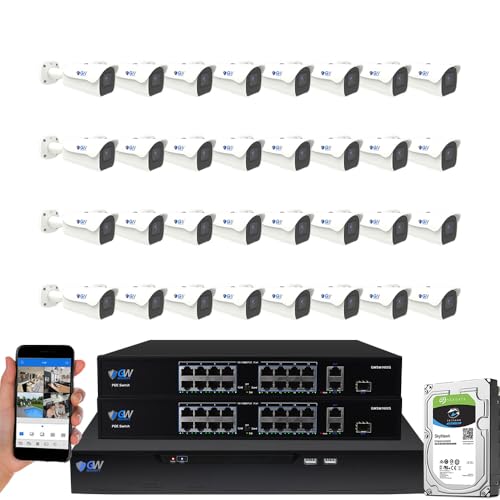
8-Megapixel with 3840x2160 Ultra High Resolution 4K Video & Audio 32 Channel 6K 12MP NVR Security Camera System with (32) 4K (8MP) Weatherproof 2.8-12mm Motorized Zoom H.265+ PoE IP Bullet Camera

Ultra High Definition 6K 12MP (4000x3000) SIX TIMES the resolution of 1080P! 32 Channel 12MP NVR Security Camera System with (32) 6K 12MP @ 30FPS Real-Time Weatherproof 125° Diagonal Wide Angle H.265+ PoE IP Microphone Bullet Cameras
Customizable Detection Zones and Sensitivity for Every Property
Are you tired of security systems that just don’t get the specifics of your property? It’s a real headache when you have unique layouts and busy areas, and your detection zones fail to recognize that. But here’s the kicker: AI-powered detection systems allow you to set custom zones with adjusted sensitivity levels tailored to your needs.
Try this: create detection perimeters around key spots like loading docks, entry points, or any restricted areas. Make sure to exclude high-traffic paths where authorized folks move without a second thought. That way, you can enjoy peace of mind without constant alerts cluttering your notifications.
The best part is, you can draw irregular polygon boundaries that fit your property’s actual layout—not just squares or rectangles. You can even set time-based activation schedules, so different zones are monitored at different times. If you want, adjust the sensitivity from 1-10 to find that sweet spot between being alert and avoiding annoying false alarms.
Here’s the trick: add object-type filters. For instance, you could ignore animals in outdoor zones but set up your system to flag human presence after hours. This means your detection system only responds to real threats, keeping unnecessary alarms at bay.
So, why does this matter? Having a personalized detection system isn’t just about security; it’s about ensuring your system understands your property like you do. Honestly, it can make all the difference in maintaining a safe environment and managing your workflow without interruptions.
In short, customizing your detection zones can save you a lot of headaches while keeping your property secure. Have you thought about how tailoring your security settings could change your experience?
Recommended Products

Ultra-Fast Intel Ultra 9 275HX Processor: With a 65W TDP and a cutting-edge design featuring 8 Performance cores and 16 Efficient cores, this next-gen silicon delivers unmatched frame rates in esports and AAA titles. AI acceleration in select creative applications further boosts performance, enabling faster rendering and smoother workflows

Ultra-Fast Intel Ultra 9 275HX Processor: With a 65W TDP and a cutting-edge design featuring 8 Performance cores and 16 Efficient cores, this next-gen silicon delivers unmatched frame rates in esports and AAA titles. AI acceleration in select creative applications further boosts performance, enabling faster rendering and smoother workflows

Max 8.0 Megapixel Full HD Realtime Recording 32 Channel H.265 4K NVR with (32) 8MP 4K Weatherproof POE H.265 IP Dome Cameras (Built-in microphone for audio recording and 2.8mm lens for 120° wide angle view)
AI Security Advancements in 2026: Autonomous Agents and Predictive Analysis
Have you ever worried about the security of your home or business? With all the advancements in technology, it’s hard to know how to keep yourself safe. Autonomous AI agents are stepping up to the plate in 2026, offering some serious peace of mind.
These AI systems have come a long way from just spotting an odd package on a porch. Now, they can analyze the whole situation, react if something’s amiss, and even write up detailed reports automatically. Imagine systems that take input from video feeds, motion detectors, and sounds to figure out if there’s a real threat lurking around. For example, they can tell the difference between a delivery truck rolling in during business hours and a suspicious vehicle parked outside at 2 AM. That’s some next-level analysis.
So, what’s the catch? Well, you won’t have to deal with annoying false alarms anymore. Predictive modeling is here to help filter out the noise while keeping an eye on genuine security breaches. These AI systems have been clocking in accuracy rates over 93% in real-life situations. With improvements like this, you can worry less about unnecessary alerts and focus on what really matters.
The best part is that these systems learn quickly. Within just a few weeks, they start adapting to your specific environment, picking up on the patterns that are unique to your space. Traditional systems just can’t keep up when it comes to personalization.
Now, you might be wondering how you can make this all work for you. Honestly, the beauty of these AI agents is that they take a lot of the burden off your shoulders. It makes sense to consider an autonomous security system that not only responds to alerts but evolves with your surroundings.
Frequently Asked Questions
Can AI Object Detection Integrate With My Existing Security Camera System?
Yes, most AI object detection works with your existing cameras. I’ve seen 93% accuracy rates achieved through proper integration. However, you’ll face integration challenges like bandwidth limits and camera compatibility issues with older analog systems requiring encoder upgrades first.
What Happens to Stored Video Footage After AI Analysis Is Complete?
After AI analysis, I’ll find that stored video footage follows your system’s video retention policies. Most footage management systems archive analyzed clips based on threat level, automatically deleting routine footage while preserving flagged events for investigation.
Does AI Security Require Constant Internet Connectivity to Function Properly?
No, I’ll explain that many AI security systems offer local processing capabilities. They can analyze footage directly on-device, providing offline functionality for core detection features. However, you’ll get enhanced capabilities and remote access with internet connectivity.
Who Can Access and Modify AI Detection Settings and Alert Preferences?
I’ll explain that access depends on user roles and permissions set by your system administrator. Typically, account owners and designated managers can modify AI detection settings, while standard users have view-only access to alert preferences.
What Backup Systems Activate if AI Processing Temporarily Fails or Malfunctions?
When AI processing fails, I’ll see backup activation through system redundancy that reverts to traditional motion detection. The system automatically switches to standard alarm protocols, ensuring continuous monitoring while technicians restore AI functionality and processing capabilities.